


When a Blocked Downspout Becomes a Bigger Problem Than You Think
Knowing how to clean a clogged downspout from the ground can help you avoid a trip to the emergency room and prevent costly damage to your home’s foundation.
Here’s the quick answer:
- Flush from below – insert a garden hose into the bottom outlet and run it at strong pressure
- Blow it clear – use a leaf blower with an adapter to push debris upward and out
- Snake it – feed a 25-foot plumber’s snake into the bottom opening and turn it clockwise
- Vacuum it out – use a wet/dry vacuum at the bottom outlet while flushing from above
- Disassemble if needed – remove the bottom elbow or extension to reach a packed blockage directly
All five methods work without a ladder.
A blocked downspout rarely announces itself. Instead, it quietly pushes water where it does not belong, soaking your foundation, rotting fascia, and raising the risk of basement flooding. By the time the problem becomes obvious, the repair bill can easily climb into the thousands.
And the traditional fix, climbing a ladder to clear the clog from above, carries serious risk too. Ladder falls send about 500,000 people to emergency rooms each year, with treatment costs ranging from roughly $2,600 for minor injuries to more than $41,000 for fractures that need surgery.
The good news: you don’t need to climb anything. Most downspout clogs can be cleared entirely from the ground, with tools you likely already own.
With over 25 years of experience helping protect homes from water damage, we have seen what happens when homeowners put off learning how to clean a clogged downspout from the ground, ignore the blockage, or take unsafe shortcuts. Below, we will walk you through what works and what to avoid.
Why You Should Learn How to Clean a Clogged Downspout From the Ground
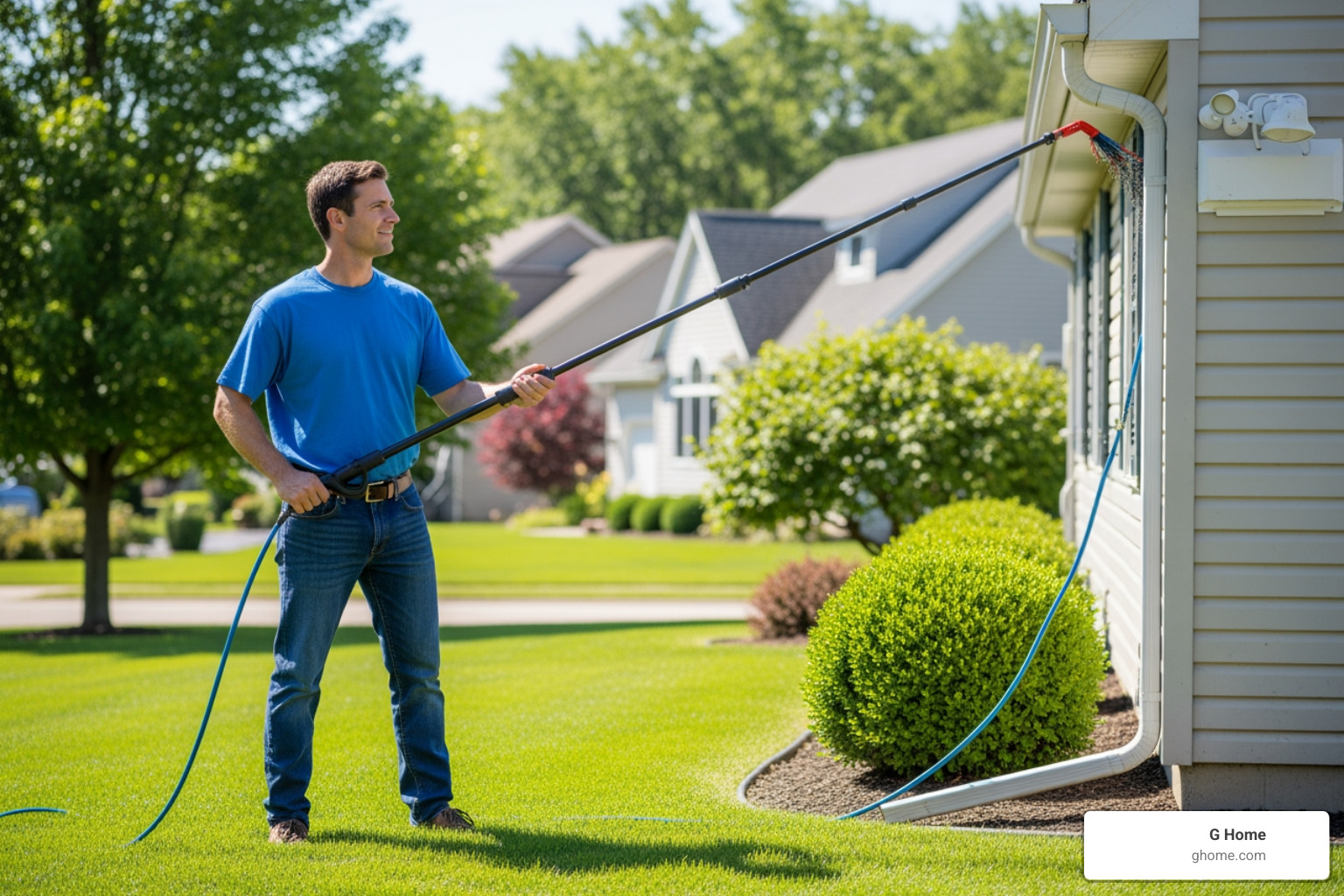
In May 2026, safety is more than just a buzzword; it’s a practical necessity for every homeowner in Middle Tennessee. Whether you live in Nashville, Franklin, or Brentwood, the risks of ladder-based maintenance are simply too high to ignore. Statistics show that falls from heights above 10 feet account for 300 annual fatalities. By mastering the art of ground-level cleaning, you eliminate the primary cause of over 650,000 ladder-related injuries each year.
Beyond your personal safety, learning how to clean a clogged downspout from the ground helps protect your home’s structure. When a downspout gets blocked, water backs up in the gutter system. That added weight can strain fasteners and pull gutters away from the house, sometimes leading to gutter repair service: Why your roof is crying for help.
The consequences of a neglected clog are far-reaching:
- Foundation Damage: Water pooling at the base of your home can cause the soil to shift, leading to foundation cracks that cost $3,000–$10,000 to waterproof.
- Fascia Rot: Overflowing water saturates the wood behind your gutters, leading to rot and mold.
- Soil Erosion: Concentrated waterfalls from overflowing gutters can ruin your expensive landscaping in Hendersonville or Murfreesboro.
- Basement Flooding: Excess water near the foundation often finds its way into crawlspaces and basements.
Best Tools for Clearing Downspout Clogs Without a Ladder
You don’t need a professional’s truck to clear most clogs. In fact, you likely have the “heavy machinery” sitting in your garage right now. Here is a breakdown of the most effective tools for ground-level success.
| Tool | Cost (DIY) | Best For | Effectiveness |
|---|---|---|---|
| Garden Hose & Jet Nozzle | $15–$30 | Loose leaves and silt | High |
| Plumber’s Snake (25 ft) | $15–$40 | Compacted “plugs” of debris | Very High |
| Leaf Blower w/ Adapter | $50–$150 | Dry debris and light clogs | Medium |
| Wet/Dry Vacuum | $60–$120 | Heavy sludge and wet leaves | High |
| Telescoping Wand | $25–$60 | Reaching high gutters from the lawn | High |
Your water hose is your primary weapon. However, for stubborn blockages, a plumber’s snake (also known as a drum auger) is invaluable. These tools allow you to navigate the tight 90-degree elbows where 90% of clogs occur.
Pro Tip: Always wear protective eyewear. When you clear a clog from the ground with air or water pressure, gravity is working against you, so anything that breaks loose can come straight back down.
Step-by-Step Guide: How to Clean a Clogged Downspout From the Ground
Before you start blasting water, you need to know where the enemy is hiding. We use the “Diagnostic Tap Test.” Take a rubber mallet or even a screwdriver handle and gently tap the length of the downspout. A clear pipe will produce a hollow, ringing sound. A clogged section will sound dull and “deadened.”
Once you’ve found the clog, which is often in the lower elbow or where the downspout meets a buried drain line, follow these steps to get your gutter cleaning system flowing again:
- Clear the Exit: Remove the downspout extension or the bottom elbow. Use a garden trowel to scoop out any visible debris.
- The Bottom-Up Flush: Insert your hose into the bottom opening, aiming upward.
- The Snake Maneuver: If water doesn’t clear it, feed your plumber’s snake into the pipe. Rotate it clockwise as you push. This method breaks up the “loaf” of debris.
- Test the Flow: Once the debris falls out, run water from the top (using a telescoping wand) to ensure the pipe is clear.
Using a Garden Hose to Clear Debris from the Ground
To maximize the power of a standard garden hose, you need to create a pressure seal. Wrap a rag or towel around the hose and stuff it into the downspout opening. This forces the water pressure upward against the clog rather than letting it leak out the bottom.
This reverse flushing method works so well because it pushes against the clog from the bottom, where it is usually less compacted. Since rainwater packs debris downward, water from below can often break it loose faster. It is also a smart approach to include in regular gutter installation and gutter repairs maintenance.
Using a Leaf Blower or Vacuum for Ground-Level Unclogging
If the debris is dry, air is often more effective than water. You can use a leaf blower with a gutter attachment kit to blow air upward. Be warned: this will result in a “debris shower,” so wear your safety gear!
Alternatively, a powerful wet/dry vacuum (at least 5.5 HP) can be used to suck the clog out from the bottom. This is often cleaner than blowing.
Managing Stubborn and Underground Downspout Blockages
In Middle Tennessee, many homes use buried downspout lines to move water away from the foundation. These are fantastic until they clog. Unlike vertical pipes, underground drains often collect shingle granules and fine silt that compacts into a brick-like substance over time.
Signs of an underground clog include:
- Water bubbling up at the base of the downspout during rain.
- Soggy “sinkholes” in your yard along the pipe’s path.
- The pop-up emitter in the yard remaining dry while gutters overflow.
When to Call a Professional for Your Clogged Downspout From the Ground
While we love a good DIY project, some situations require the “big guns.” You should look for the best gutter cleaning services near me if:
- Your home is multi-story: Reaching second or third-story downspout entries from the ground is difficult and potentially dangerous.
- The clog is “petrified”: If a snake and high-pressure hose don’t budge it, the debris may have turned into a solid block of compost and shingle grit.
- Underground failure: If water is pooling in the yard, you may need camera diagnostics or hydro-jetting to clear roots or debris deep in the line.
At G Home, we use professional-grade augers and high-velocity flushing systems that clear in 15 minutes what might take a homeowner four hours of frustration.
Long-Term Prevention and Maintenance Strategies
The best way to clean a downspout is to never let it get clogged in the first place. Regular maintenance can reduce your workload by 90%.
- Tree Trimming: Keep branches at least 3 feet away from your roofline to limit the amount of organic matter entering the system.
- Seasonal Inspections: Check your downspouts every spring and fall.
- Strainer Baskets: These inexpensive wire inserts sit at the top of the downspout to catch large leaves. Note: These require a ladder to clean, so they aren’t a perfect “ground-only” solution.
The most effective long-term strategy is gutter protection. High-quality gutter guards help keep debris out of the downspout, so water can move through the system more freely. That is a big reason why gutter guards are essential before storm season.
Installing Gutter Protection to Prevent Future Clogs
For homes in Nashville and the surrounding Middle Tennessee area, micro-mesh systems are the gold standard. Unlike plastic covers or foam inserts, micro-mesh allows water in while keeping even tiny pine needles and shingle grit out.
Investing in gutter protection provides foundation protection that can help for years. When you choose the best gutter guard types for Tennessee homes, you reduce the debris that reaches your downspouts, which means fewer clogs and less need for snakes, vacuums, or ladders.
Frequently Asked Questions about Downspout Cleaning
Can I use a pressure washer to clean my downspout from the ground?
Technically, yes, but we advise caution. Pressure washers are often “overkill” for residential aluminum downspouts. The extreme pressure can force water into your wall cavities or blow out the rivets at the seams. If you do use one, use a specialized gutter-cleaning attachment and keep the PSI low.
How often should I check my downspouts for clogs?
In Middle Tennessee, we recommend a minimum of two checks per year. Late fall (November) is the most critical time to clear out fallen leaves. A secondary check in late spring is vital to remove “helicopters” (maple seeds) and oak tassels.
Will a drain bladder damage my rectangular downspouts?
Yes, it can. Drain bladders are designed for round, heavy-duty pipes like PVC or cast iron. Standard residential downspouts are rectangular and made of thin aluminum. A bladder can expand with enough force to “unzip” the seams of the downspout or dent the metal. Stick to hoses and snakes for vertical downspouts.
Conclusion
Mastering how to clean a clogged downspout from the ground is a vital skill for any homeowner who values safety and home maintenance. By using the “bottom-up” approach with garden hoses, plumber’s snakes, or wet/dry vacuums, you can protect your foundation without ever stepping foot on a ladder.
However, DIY has its limits. If you’re dealing with a stubborn underground clog, a multi-story home, or just want extra peace of mind, we are here to help. From professional gutter cleaning to permanent gutter protection, G Home is a trusted partner for stress-free exterior maintenance.
Do not let a “quiet” clog become an expensive foundation problem. Clean your downspouts today and do it safely from the ground.