


What Every Tennessee Homeowner Needs to Know About Roof Algae Treatment
Roof algae treatment is the process of safely removing biological growth, especially the dark streaks caused by the cyanobacterium Gloeocapsa magma, from your roof and then helping prevent it from returning.
Here’s the quick version if you need it now:
- Identify the growth: Black or dark gray streaks are usually algae. Thick green clumps are usually moss. Slimy or blotchy discoloration can point to mold or mildew.
- Apply the right cleaner: Use a 50/50 mix of laundry-strength bleach and water, or a no-rinse product with a low-pressure sprayer.
- Give it time to work: Let the solution sit for 15 to 20 minutes before rinsing with low-pressure water only.
- Avoid pressure washing: High pressure can remove protective granules, damage shingles, and may void your roof warranty.
- Reduce future growth: Trim branches, keep gutters clear, improve attic ventilation, and consider zinc or copper strips near the roof ridge.
If you’re a Middle Tennessee homeowner, you’ve almost certainly seen those dark streaks creeping across your shingles. It’s easy to mistake them for dirt, mold, or just general wear — but the culprit is almost always algae. And it’s more common here than in most parts of the country.
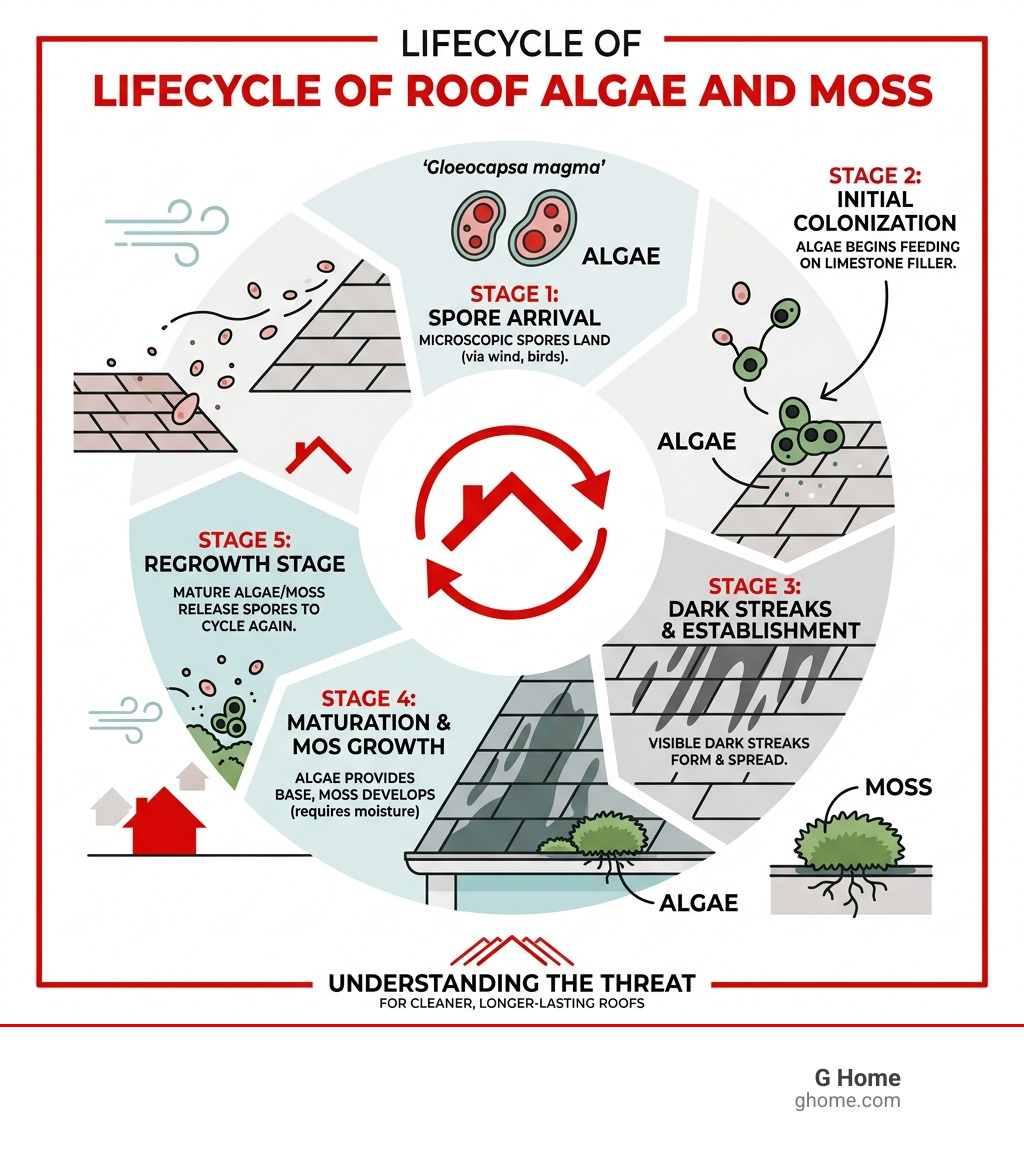
Tennessee’s warm, humid summers create near-perfect conditions for Gloeocapsa magma to grow. This microscopic organism feeds on the limestone filler used in asphalt shingles, and it spreads quietly through airborne spores, sometimes carried by wind, birds, or nearby rooftops. By the time you can clearly see the dark streaks, the algae has often been growing for months.
Left alone, it does more than hurt curb appeal. It can hold moisture against the roof, wear down shingles faster, reduce energy efficiency, and over time create the right conditions for moss and mold to grow.
The good news: it’s treatable, and it’s preventable.
At G Home, we bring over 25 years of experience helping homeowners protect their properties, including the unique roof algae treatment challenges that come with Middle Tennessee’s climate. In this guide, you’ll learn how to identify, treat, and prevent roof algae safely and effectively.
Understanding the Difference: Algae, Moss, and Mold
In our 25+ years of serving Middle Tennessee, we’ve found that many homeowners use the terms “algae,” “moss,” and “mold” interchangeably. However, when it comes to roof algae treatment, knowing exactly what is growing on your shingles is the first step toward a successful cleaning.
The Comparison Table: What’s on Your Roof?
| Feature | Roof Algae (Gloeocapsa magma) | Roof Moss | Mold & Mildew |
|---|---|---|---|
| Appearance | Black or dark brown streaks; looks like “dirt” or “soot.” | Green, fuzzy, thick clumps or carpets. | Slimy, black, or colorful spots; often smells musty. |
| Growth Habit | Spreads via airborne spores; feeds on limestone filler. | Non-vascular plant; anchors into shingles with “roots.” | Fungi that thrives on organic debris and moisture. |
| Primary Damage | Cosmetic; increases heat absorption; can lead to moss. | Lifts shingle edges; traps water; causes structural rot. | Health hazard; signals serious moisture/ventilation issues. |
| Preferred Area | North-facing slopes and shaded sections. | Damp, heavily shaded areas under trees. | Poorly ventilated attics and stagnant water spots. |
Why Does Algae Look Black?
You might wonder why “blue-green algae” looks like charcoal on your roof. This organism produces a dark-pigmented sheath to protect itself from ultraviolet (UV) rays. It’s essentially the algae’s version of sunscreen.
The Danger of Moss
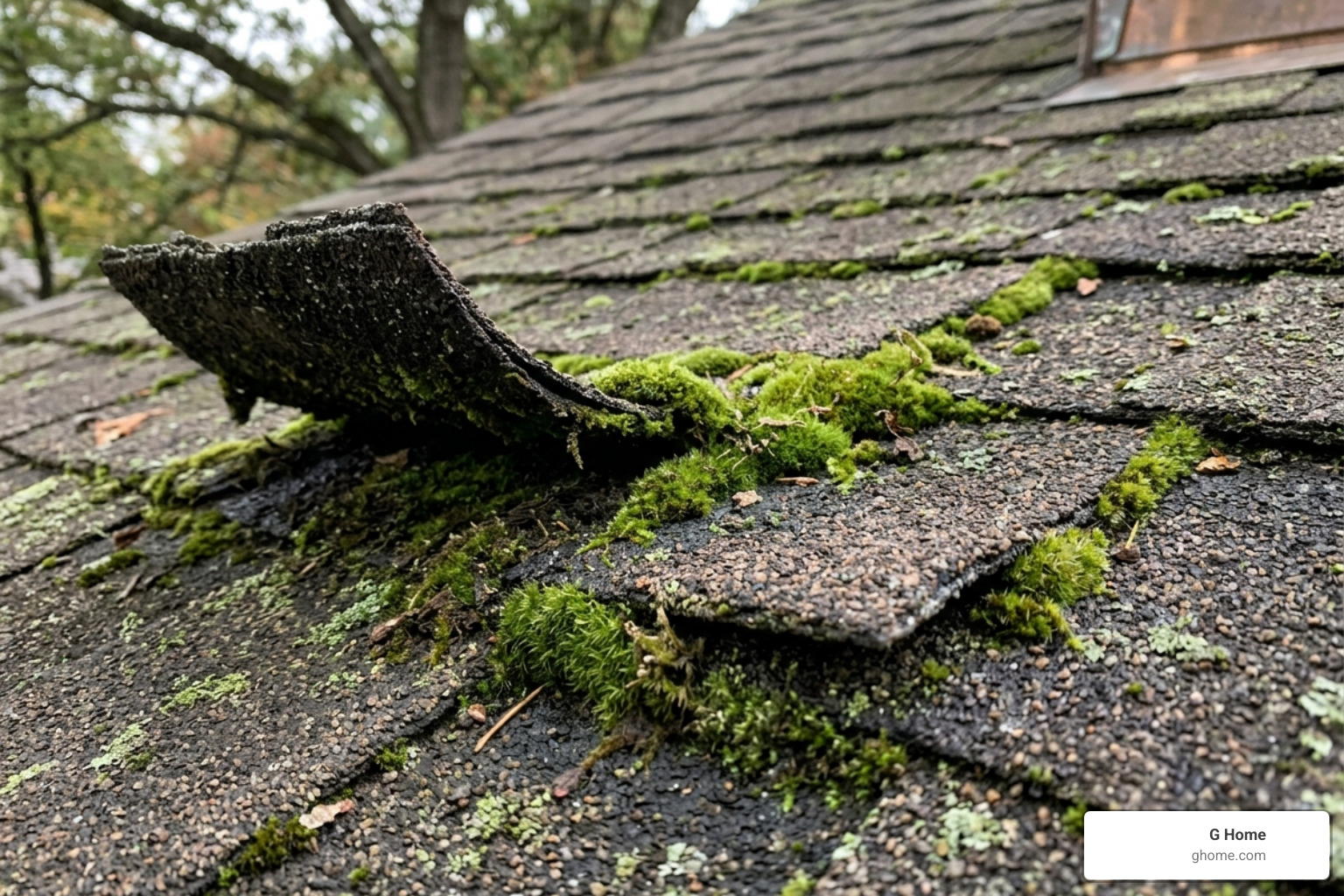
While algae is primarily an aesthetic issue (at least initially), moss is a different beast entirely. Moss acts like a sponge, retaining moisture against the roof surface. As it grows, it can lift the edges of asphalt shingles, making them susceptible to “blow-off” during Tennessee’s frequent spring storms. If left untreated, the moisture trapped by moss can lead to wood rot in the roof deck.
Effective Roof Algae Treatment Methods
When it’s time to actually perform a roof algae treatment, you have two main paths: the DIY approach or professional soft washing. Both rely on the same chemical principles: killing the organism at the root rather than just “blasting” it off the surface.
The Soft Wash Approach
At G Home, we specialize in soft washing, which is the industry-standard method for cleaning delicate surfaces like asphalt shingles. Unlike high-pressure washing, soft washing uses a specialized solution — typically a mix of sodium hypochlorite (bleach), water, and a surfactant (which helps the cleaner “stick” to the roof).
According to our guide on how soft washing safely cleans your roof in Brentwood, the “dwell time” is the most important part. You apply the solution, let it sit for 15–20 minutes to penetrate the algae colonies, and then rinse it away with a pressure no higher than a standard garden hose.
Commercial and Eco-Friendly Options
If you aren’t a fan of using bleach, there are several commercial products available, designed to be “no-rinse.” You spray them on and let the rain rinse them over several months. These are often quaternary ammonium compounds, which are slower-acting but generally safer for surrounding vegetation.
Another option is oxygen-based bleach (sodium percarbonate). While it requires more scrubbing and isn’t quite as potent against deep-seated algae as chlorine bleach, it is biodegradable and breaks down into water and oxygen. For more on why these methods matter locally, check out our article on the importance of soft washing for Tennessee homes.
The Risks of High-Pressure Roof Algae Treatment
We cannot stress this enough: Keep pressure washers away from your shingles.
A standard pressure washer can reach 3,000 PSI or more. At that strength, the water acts like a sandblaster. It will strip away the ceramic-coated granules that protect your shingles from the sun. Once those granules are gone, your shingles will dry out, curl, and fail prematurely. Furthermore, most shingle manufacturers will void your warranty if they find evidence of high-pressure cleaning.
Safety Precautions for DIY Roof Algae Treatment
If you decide to tackle this yourself, safety must be your top priority. Roof work is inherently dangerous, and adding water and soap to the mix makes things incredibly slippery.
- Fall Protection: Use a safety harness and ensure your ladder is properly secured.
- PPE: Wear protective eyewear, gloves, and a mask to avoid breathing in bleach fumes.
- Landscaping Protection: Bleach can kill your prize-winning hydrangeas. Thoroughly wet all plants and grass near the house before, during, and after the treatment to dilute any runoff. You can also cover sensitive plants with plastic sheeting.
- Non-Slip Footwear: Wear shoes with high-traction rubber soles.
- Weather Conditions: Choose a calm, overcast day. Direct sunlight causes the cleaning solution to evaporate too quickly, reducing its effectiveness.
For those living in historic areas, special care is required. We’ve detailed these nuances in our guide on why soft washing is best for historic homes in Franklin, TN.
Long-Term Prevention and Maintenance Strategies
Cleaning the roof is only half the battle. If you don’t change the environment that allowed the algae to grow, it will likely return within 12 to 24 months.
The Power of Metal Strips
One of the most effective long-term roof algae treatment preventatives is the installation of zinc or copper strips. These are installed near the ridge of the roof. When it rains, water hits the metal and carries tiny metallic ions down the roof. These ions are toxic to algae and moss, creating a “biostatic zone” where they cannot grow.
However, keep in mind that these strips typically only protect about 10 to 15 feet below the installation point. On very large or steep roofs, you may need multiple rows of strips.
Environmental Adjustments
Algae loves shade and moisture. You can make your roof less hospitable by:
- Trimming Trees: Cut back overhanging branches to allow more sunlight to hit the roof and improve airflow.
- Gutter Maintenance: Clogged gutters trap moisture at the roof’s edge. Keeping them clear ensures water moves off the roof as quickly as possible.
- Attic Ventilation: A hot, humid attic can “cook” shingles from the inside out and contribute to surface moisture. Ensure your ridge vents and soffit vents are clear.
Regular debris removal (like blowing off fallen leaves) is essential, as organic matter provides the nutrients algae and moss need to thrive.
Choosing Algae-Resistant Shingles for Future Protection
If you are planning a roof replacement in the near future, look for “Algae-Resistant” (AR) shingles. These shingles are manufactured with copper-infused granules mixed into the standard granules.
Companies like 3M have developed advanced technology that allows these granules to release copper ions slowly over 10 to 25 years. While they may have a slightly higher upfront cost, the long-term ROI in a humid climate like Nashville is significant. In coastal and humid climates, unprotected shingles can show streaks in as little as three years. AR shingles prevent this “streak manifestation” for much longer.
Professional Maintenance as a Roof Algae Treatment
Sometimes, the best roof algae treatment is a proactive maintenance plan. Professional inspections can catch algae growth before it becomes visible from the street. By applying a maintenance rinse every few years, you can keep the biostatic zone active and prevent the need for a heavy-duty deep clean.
Frequently Asked Questions about Roof Algae
Does roof algae cause structural damage to my home?
By itself, algae is mostly a cosmetic issue and a precursor to more serious growth. However, it does cause the roof to absorb more heat, which can increase your cooling costs and accelerate the aging of the shingles. If it evolves into moss or lichen, then structural damage (like wood rot) becomes a very real threat.
How often should I schedule a roof algae treatment in Tennessee?
In the Nashville and Middle Tennessee area, we generally recommend a professional soft wash every 2 to 5 years, depending on your home’s shade coverage and proximity to trees. If you start to see dark streaks, it’s time to schedule a cleaning.
Are zinc or copper strips effective for preventing regrowth?
Yes, they are highly effective but have limitations. They only protect the area directly below them (roughly 10–15 feet). They also lose effectiveness as the metal corrodes over time, so they may need to be replaced after 10 years.
Conclusion
Your roof is one of the most expensive components of your home, and in Middle Tennessee, the climate is constantly trying to reclaim it. Between the high humidity in Hendersonville and the heavy tree canopies in Brentwood, roof algae treatment is a necessary part of homeownership.
At G Home, we bring 25+ years of experience to every job. We understand the local climate challenges and the science behind safe, effective cleaning. Whether you need a one-time soft wash to restore your curb appeal or a long-term maintenance plan to protect your investment, we are here to provide stress-free, professional service.
Don’t let those black streaks devalue your home. If you’re ready to see the difference professional care can make, contact our professionals to explore our residential soft and pressure washing services today. We serve Nashville, Franklin, Murfreesboro, and the entire Middle Tennessee region with pride.