
The Benefits of Hiring Experts for Post-Construction Cleaning
Why a New Build Clean Out Is the Final Step Before You Move In
A new build clean out is the multi-phase cleaning process that removes construction dust, debris, adhesive residue, and fine particles from a newly built home, making it safe and truly move-in ready.
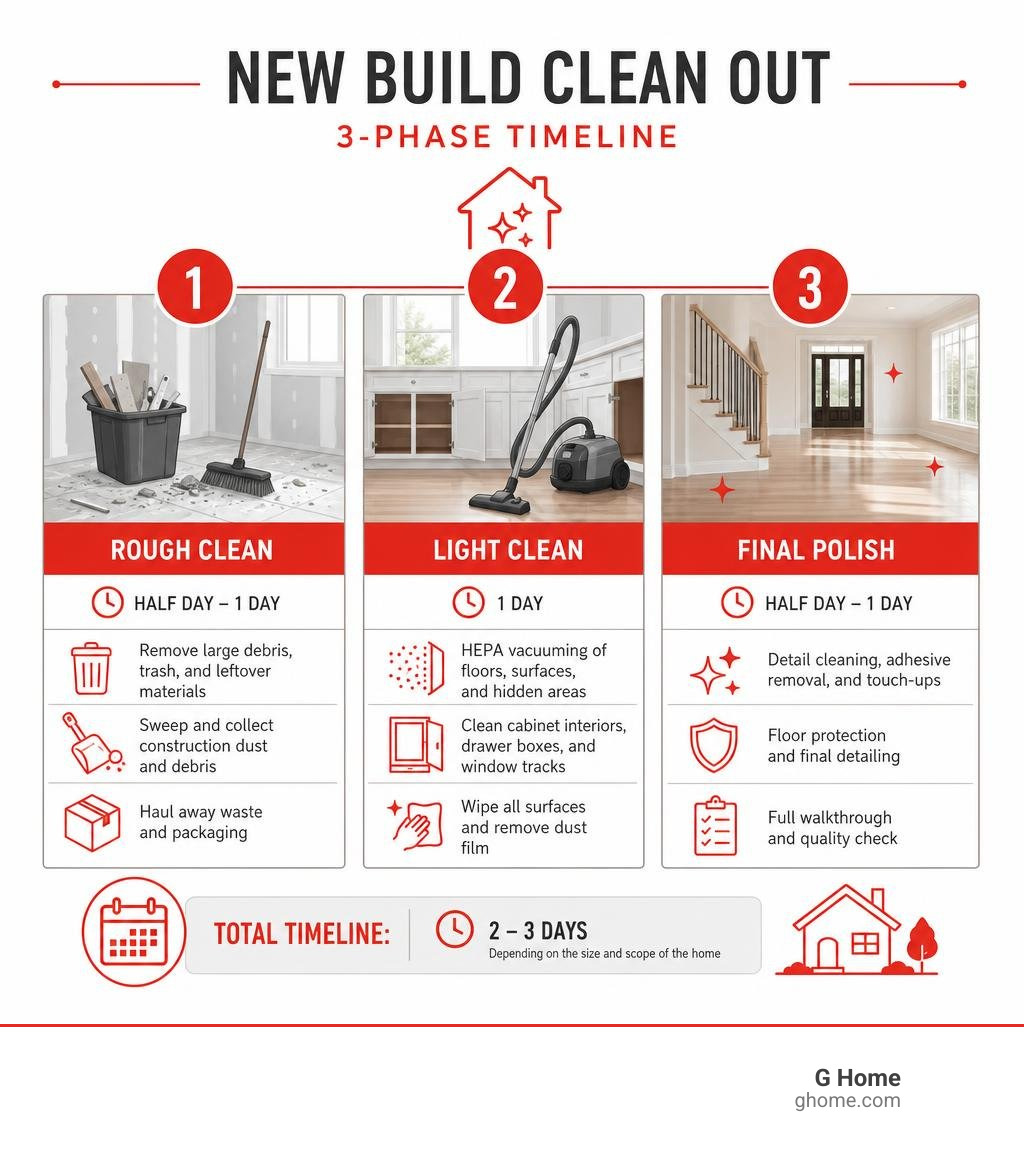
Here’s what a new build clean out typically involves:
- Rough clean: removing large debris, trash, and leftover materials
- Light clean: HEPA vacuuming, cabinet interiors, window tracks, and surface wiping
- Final polish: touch-up cleaning, adhesive removal, floor protection, and a full walkthrough
- Exterior cleanup: pressure washing, debris removal from gutters, and surface rinsing
You’ve watched your new home come together over months of planning, permits, and construction. Now the crews have packed up, and the space looks almost ready.
Almost.
What they leave behind is more than just visible mess. Construction generates fine silica dust, drywall film, paint overspray, and volatile organic compounds (VOCs) from fresh adhesives and sealants. These do not just sit on surfaces. They settle inside cabinets, HVAC vents, window tracks, and floor edges. Standard cleaning routines are not built to handle them.
That gap between “construction finished” and “ready to live in” is exactly what a professional new build clean out is designed to close.
G Home brings decades of home services experience helping Middle Tennessee homeowners protect and maintain their properties, including coordinating post-construction exterior care after a new build clean out is complete. In the sections below, we’ll walk through every phase of the process so you know exactly what to expect before you unpack that first box.
What is Post-Construction Cleaning and Why is it Necessary?
To the untrained eye, a newly completed home looks ready for furniture. The walls are painted, the gorgeous hardwood floors are down, and the modern light fixtures are hanging elegantly from the ceilings. However, if you run your finger along any flat surface, you will likely find a thick, white, ghostly powder.
This is not your average household dust. During a home build or major renovation, the air is filled with highly abrasive micro-particles. Drywall film, sawdust, plaster fines, and microscopic silica dust from masonry cutting hang in the air for days before slowly settling onto every available surface.
This fine dust does more than look bad. It can create real risks for your home’s systems and your family’s health.
- Indoor Air Quality (IAQ) Degradation: Indoor air can become much more polluted after construction because of airborne silica dust and volatile organic compounds (VOCs) released from fresh paint, sealants, floor finishes, and cabinetry adhesives.
- HVAC System Strain: If the heating and cooling system ran during the final “punch-list” phases of construction, microscopic dust particles may have traveled into supply grilles, returns, and ductwork. Left alone, that dust can keep recirculating, clog new filters, and put extra strain on HVAC components.
- Surface Damage: Construction dust is abrasive. Moving boxes, sliding furniture, or sweeping with a standard broom can grind sharp micro-particles into new hardwood, tile, and countertop finishes, causing fine scratches before you even move in.
Standard residential cleaning routines are designed to handle organic living dirt and surface grease. They are simply not equipped to manage the sheer volume and chemical nature of post-construction debris. For homeowners planning a move-in clean, G Home can also coordinate broader residential exterior maintenance services that help keep new siding, gutters, and outdoor surfaces protected after construction wraps.
The Three Essential Phases of a New Build Clean Out
A successful new build clean out is not a single, rushed afternoon of sweeping and wiping. It is a highly structured, sequential process that mirrors the flow of construction itself. Attempting to deep clean before the final trades have completed their work is a recipe for frustration, as dust will simply resettle.
Professional cleaners divide the post-construction cleanup into three distinct, non-negotiable phases:
| Phase | Main Focus | Key Tasks | Timing |
|---|---|---|---|
| Phase 1: Rough Clean | Bulk Debris & Prep | Removing large trash, hauling wood/metal scraps, pulling up protective floor carpets, peeling manufacturer stickers. | Immediately after major construction wraps up. |
| Phase 2: Light Clean | Detailed Deep Cleaning | HEPA vacuuming ceilings to floors, wiping inside cabinets, cleaning window tracks, neutralizing grout haze. | Once all trades and subcontractors have officially left the site. |
| Phase 3: Final Polish | Touch-up & Perfection | Buffing glass, polishing fixtures, removing lingering settled dust, final walkthrough. | 24 to 48 hours before legal handover or move-in. |
Phase 1: The Rough Clean Phase of a New Build Clean Out
The rough clean is the heavy-lifting phase. It takes place while the final trim carpenters, plumbers, and electricians are wrapping up their punch lists. The primary goal here is to make the home safe and navigable for detailed cleaning.
During this phase, crews focus on bulk debris removal and trash hauling. This includes collecting leftover drywall chunks, metal framing studs, wiring offcuts, and stray nails that pose safety hazards. Additionally, this is when protective plastic films are peeled off windows, countertops, and appliances, and manufacturer stickers are carefully removed.
Phase 2: The Light Clean Phase
Once the heavy debris is gone and the trades have completely vacated the building, the real magic begins. The light clean is the most labor-intensive phase of the entire new build clean out.
This phase requires specialized commercial-grade equipment and advanced cleaning techniques:
- HEPA-Filtered Vacuuming: Standard household vacuums will quickly clog or blow fine drywall dust right back into the room. Professionals use industrial vacuums equipped with certified HEPA filters capable of trapping 99.97% of particles as small as 0.3 microns. Cleaners use a top-down approach, vacuuming ceilings, light fixtures, and walls before ever touching the floors.
- Cabinet Detailing: Construction dust has a sneaky habit of settling inside cabinet hinges, drawer glides, and under kitchen island overhangs. Every single cabinet and drawer must be vacuumed and wiped down inside and out.
- Window Tracks and Glass: Window tracks are notorious “mystery grit” traps. Crews use specialized detail brushes and plastic scrapers to remove packed-in plaster and sawdust without scratching the vinyl or aluminum frames.
- Grout Haze Removal: Newly tiled bathrooms often have a stubborn, cloudy film left behind by the grouting process. This grout haze cannot be washed away with water alone; it requires specific chemical solutions applied with precise techniques to avoid damaging the fresh grout joints.
- Microfiber Technology: Rather than spreading dust around with standard cotton cloths, professionals utilize positively charged microfiber cloths that magnetically attract and hold fine dust.
Phase 3: The Final Polish of a New Build Clean Out
Even after a thorough light clean, fine particles smaller than 2.5 microns will continue to float in the air and settle over the next 48 to 72 hours. This is known as “reappearing dust” syndrome.
The final polish, or “sparkle clean,” takes place just before move-in to address this settled dust. It is a detail-oriented pass where every surface is polished to a high shine. Glass doors, mirrors, and chrome fixtures are buffed to a streak-free finish, and floors receive a final damp mop with pH-neutral cleaners to ensure there are no footprints or hazy streaks left behind.
Post-Construction Cleaning vs. Regular Deep Cleaning
A common misconception among homeowners is that post-construction cleaning is simply a regular deep clean with a different name. In reality, the two services target entirely different types of soil and require completely different skill sets, tools, and chemical knowledge.
A standard deep clean focuses on removing “living dirt,” organic matter like skin cells, pet dander, grease, soap scum, and everyday dust that accumulates over months of occupancy.
A new build clean out is designed to tackle industrial contaminants. It requires the removal of:
- Silica Dust and Plaster Fines: These mineral-based particles require dry containment before any moisture is introduced. Wetting fine drywall dust turns it into a clay-like paste, which can ruin paint finishes and smear across floors.
- Adhesive Residue: Manufacturer labels on windows, mirrors, toilets, and appliances leave behind a stubborn, sticky glue. Removing this requires specialized adhesive solvents and plastic razor blades to prevent scratching delicate glass and chrome surfaces.
- Paint and Caulk Overspray: Tiny specks of paint and silicone caulk often land on floors, baseboards, and window panes. Removing these requires a delicate touch and the right chemical balance to lift the overspray without stripping the underlying finish.
Using the wrong products can have costly consequences. For example, applying acidic cleaners to brand-new marble or using abrasive scrubbing pads on modern hardwood can void manufacturer warranties. This is why the DIY vs. professional debate is so heavily weighted toward hiring experts. A professional crew knows how to protect your brand-new finishes using pH-neutral cleaners and non-abrasive tools.
Cost Factors and Responsibilities: Who Pays and How Much?
When budgeting for a new construction project or a major home remodel, post-construction cleaning should always be factored in early.
Who is Responsible for the Clean?
In many cases, the general contractor’s contract will include a “broom clean” clause. However, homeowners are often surprised to find that “broom clean” simply means the contractor will sweep up major sawdust and remove large trash. It does not mean the home is ready for you to sleep in.
The responsibility for the final, detailed move-in clean typically falls on the homeowner.
What Does it Cost?
Post-construction cleaning is highly customized, and the final cost depends on several key factors:
- Square Footage: Larger homes usually require more time, supplies, and detail work. Complex layouts, high ceilings, large windows, and detailed trim can also increase the scope of the clean.
- Labor Hours: A new build clean out often takes a full team working through multiple phases, especially when dust has settled into cabinets, vents, window tracks, and flooring.
- Junk Removal Needs: If heavy debris, packaging, scrap materials, or leftover construction waste remain on-site, hauling and disposal may be priced separately from the cleaning itself.
While doing it yourself might seem like a way to save money, a homeowner tackling this over a weekend might spend 16 to 20 hours of exhausting physical labor and still struggle to eliminate the recurring drywall dust. Hiring a professional crew ensures the job is completed in a fraction of the time with industrial-grade results.
Safety, Disposal, and Exterior Maintenance Considerations
A thorough new build clean out doesn’t stop at the front door. Construction is a messy process that impacts your entire property, and the exterior of your new home requires just as much attention as the interior.
Safety and Debris Disposal
Post-construction sites can harbor hidden hazards. Sharp metal shards, stray roofing nails, and chemical residues must be handled and disposed of safely. Professional cleaners are trained to follow safety protocols, identify hazardous waste, and adhere to local environmental regulations for debris disposal.
The Exterior Impact: Gutters and Siding
During the building process, roofing materials are cut, siding is shaved, and mortar is mixed. Wind and rain wash these heavy, abrasive materials directly into your brand-new gutter system.
It is incredibly common for newly constructed homes to have gutters filled with roofing granules, concrete dust, wood shavings, and stray nails. If left uncleaned, this heavy debris will clog your downspouts, leading to water pooling and potential roof damage. For homeowners in Middle Tennessee, professional gutter cleaning services can help remove construction debris from gutters and flush downspouts before those clogs create larger water-management problems.
Construction cleanup is also the right time to inspect the gutter system’s alignment, joint seals, and drainage performance. The same debris that blocks downspouts can contribute to long-term roof and fascia issues, which is why understanding how gutter cleaning extends roof life can help homeowners protect a new build from preventable water damage.
If construction traffic, ladders, or settling materials leave sections loose or leaking, G Home can help identify the next step. Homeowners can use the ultimate guide to gutter repairs to understand warning signs before small gutter issues turn into expensive exterior repairs.
To protect your home’s exterior curb appeal, consider adding professional exterior cleaning to your post-construction plan. This includes:
- Exterior Soft Washing: A low-pressure washing method that safely removes construction dust, clay splatters, and organic buildup from siding without harming fresh paint or delicate stucco.
- Gutter Cleaning: Clearing construction debris from gutters and flushing downspouts so your water management system works properly. For those living in Nashville, Franklin, Murfreesboro, Hendersonville, Brentwood, Smyrna, and Nolensville, timing matters.
Frequently Asked Questions about Post-Construction Cleaning
When should I schedule a professional post-construction clean?
You should schedule your final deep clean 24 to 48 hours after all construction work, inspections, and trade punch lists are 100% complete. Scheduling it any earlier risks having tradespeople walk back through the home, dragging in dirt and kicking up fresh dust that will ruin the cleaning results.
Can construction dust damage my new hardwood floors?
Yes, absolutely. Drywall dust and concrete dust are highly abrasive and act like sandpaper underfoot. Sweeping with a standard broom or using harsh, abrasive chemicals can cause micro-scratches on 95% of hardwood finishes. Professionals always use HEPA vacuums first to lift the dust, followed by microstatic dust mops and pH-neutral cleaners specifically formulated for new floor finishes.
Is the builder’s final clean enough for me to move in?
In almost all cases, no. A builder’s “final clean” is typically a basic “broom clean” designed to prepare the home for a final walkthrough or real estate inspection. It rarely includes detailed tasks like cleaning inside cabinet drawers, wiping down window tracks, removing adhesive residue from glass, or eliminating fine, airborne dust.
Conclusion
Building or renovating a home is a massive journey. When the final hammer swings and the builders depart, you deserve to step into a space that feels genuinely new, healthy, and pristine. A professional new build clean out is the essential bridge that transforms a dusty construction site into a welcoming sanctuary.
While you focus on organizing your packing boxes and planning your interior design, let professionals handle the heavy lifting, high-reach dusting, and intricate detailing.
At G Home, we have over 25 years of experience helping homeowners across Middle Tennessee, including Nashville, Franklin, Murfreesboro, Hendersonville, Brentwood, Smyrna, and Nolensville, protect their properties from the unique challenges of our local climate. From clearing construction debris out of your brand-new gutters to washing away red clay and drywall film from your development’s exterior, we provide stress-free, expert care tailored to your needs.
Ready to put the finishing touches on your new build? Contact our professional new build clean out technicians at G Home today to schedule, and let us help you protect your investment from the very start.