
Storefront Power Washing: How to Make a Great First Impression
Your Storefront Is Sending a Message: Is It the Right One?
Storefront power washing is one of the fastest, most cost-effective ways to improve your business’s curb appeal and attract more customers. Here’s a quick summary of what you need to know:
| Topic | Quick Answer |
|---|---|
| What is it? | Pressure or soft washing of a commercial building’s exterior, windows, sidewalks, and entryways |
| Why does it matter? | A dirty storefront drives customers away before they ever walk in |
| How often? | Every 3 to 6 months for most storefronts; monthly for high-traffic locations |
| How long does it take? | Typically 1 to 3 hours per storefront |
| Average cost? | $250 to $500 for a single storefront cleaning |
| Can it disrupt business? | No, professional cleaning is scheduled during off-hours |
Think about the last time you walked past two similar restaurants side by side. One had a clean entrance, fresh windows, and a welcoming path to the door. The other had grimy concrete, streaked glass, and what looked like years of buildup on the walls. Which one did you choose?
Your customers make that same split-second judgment about your business every single day.
A dirty storefront doesn’t just look bad. It signals to potential customers that you don’t pay attention to details. And in a competitive market, that perception can quietly cost you foot traffic, sales, and trust.
The good news? A professional cleaning can transform a storefront in just a few hours.
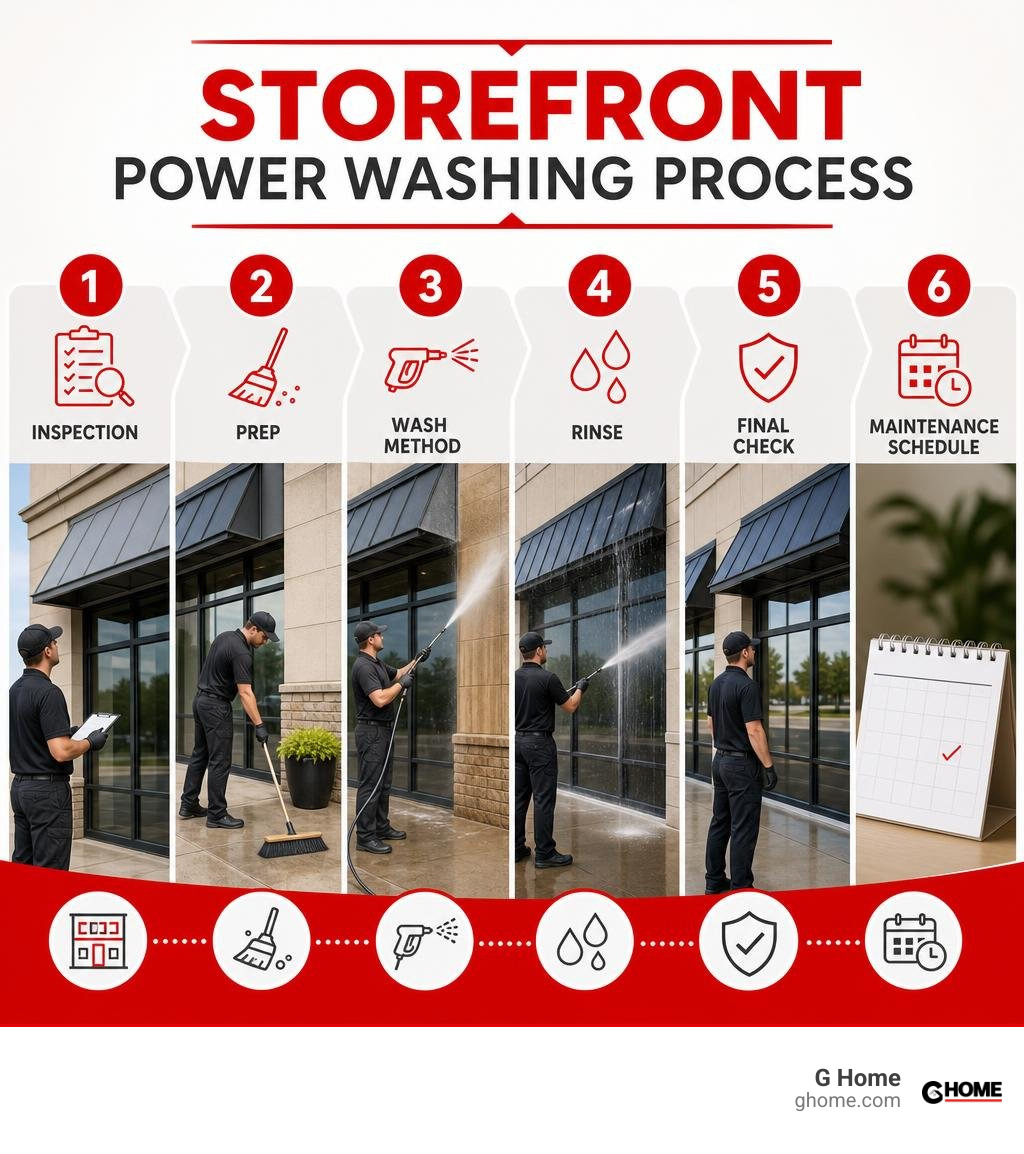
Why Storefront Power Washing Is Essential for Your Business
When potential customers approach your business, your storefront acts as a silent salesperson working 24/7 to draw them in. A clean, sparkling entrance signals high quality and professionalism before a customer ever steps through your door. Conversely, a dirty or neglected exterior actively conveys the wrong message, quietly undermining your established brand reputation and giving competitors an easy advantage.
Beyond the clear psychological impact on customer behavior, regular storefront cleaning is a critical component of physical property maintenance. Middle Tennessee’s humid climate creates the perfect breeding ground for organic contaminants like mold, algae, and mildew. Over time, these pollutants don’t just look unsightly; they gradually break down concrete, degrade building siding, and eat away at mortar. Investing in routine washing helps prevent long-term structural damage, ultimately protecting your overall property value and saving you from costly premature replacements.
Additionally, keeping your exterior clean is a vital step in reducing business liability. High-traffic walkways naturally accumulate slippery substances like grease, oil, food spills, and algae. If left untreated, these areas become major slip-and-fall hazards for your customers and employees. Utilizing professional commercial exterior cleaning services to lift these hazards from your entryway protects your pedestrians and insulates your business from costly negligence claims.
Pressure Washing vs. Soft Washing: Which Method Does Your Storefront Need?
Many business owners use the terms pressure washing and soft washing interchangeably, but they are actually two distinct cleaning methods designed for completely different surfaces. Using the wrong technique can easily result in shattered windows, stripped paint, or ruined masonry.
Below is a quick reference table comparing the two primary methods we use to keep commercial exteriors in top shape:
| Feature | High-Pressure Power Washing | Low-Pressure Soft Washing |
|---|---|---|
| Typical Pressure | High (2,000 to 4,000+ PSI) | Low (under 500 PSI) |
| Primary Cleaning Agent | Pressurized water and heat | Specialized biodegradable detergents |
| Best Used For | Concrete sidewalks, driveways, gum removal | Brick, vinyl, stucco, awnings, signage, glass |
| Risk of Damage | High on delicate materials | Extremely low |
Choosing the right approach is essential for a safe, thorough clean. For durable concrete and entry areas, high pressure may be appropriate, while delicate facades usually need a gentler cleaning process. This same distinction is important for property owners comparing soft washing vs pressure washing for exterior surfaces.
When to Use High-Pressure Storefront Power Washing
High-pressure washing is the heavy-duty solution reserved for highly durable, non-porous surfaces. In a commercial storefront setting, this almost exclusively means concrete sidewalks, entry stairs, and loading docks.
Sidewalks take a beating from foot traffic, accumulating everything from discarded chewing gum and soda spills to leaked engine oil and tire scuffs. To tackle these stubborn, coagulated stains, we utilize professional-grade pressure washers equipped with hot-water burners. This process, often called hot-water extraction, works like a commercial dishwasher, using temperatures of up to 200 degrees Fahrenheit to melt away grease, dissolve oil, and instantly lift hardened chewing gum without leaving unsightly shadows on the concrete.
When to Use Low-Pressure Storefront Power Washing
For almost every other part of your storefront, high pressure is simply too dangerous. Delicate materials like historic brick, vinyl siding, stucco, canvas awnings, and dimensional signage require a gentler touch. This is where low-pressure soft washing comes in.
Instead of relying on sheer force to blast away dirt, soft washing uses specialized, eco-friendly cleaning solutions to break down organic contaminants at their source. We apply these biodegradable detergents at a pressure similar to a garden hose, allowing them to safely dissolve mold, mildew, algae, and pollen. After a short dwell time, we perform a gentle rinse to leave your building’s facade looking pristine without risking cracked mortar or water intrusion. The same low-pressure principle behind our soft washing services helps protect sensitive storefront materials while still delivering a noticeable clean.
The Step-by-Step Storefront Cleaning and Maintenance Process
To achieve professional results without disrupting your daily operations, we follow a highly structured, multi-step commercial cleaning process tailored to the unique demands of Middle Tennessee businesses.
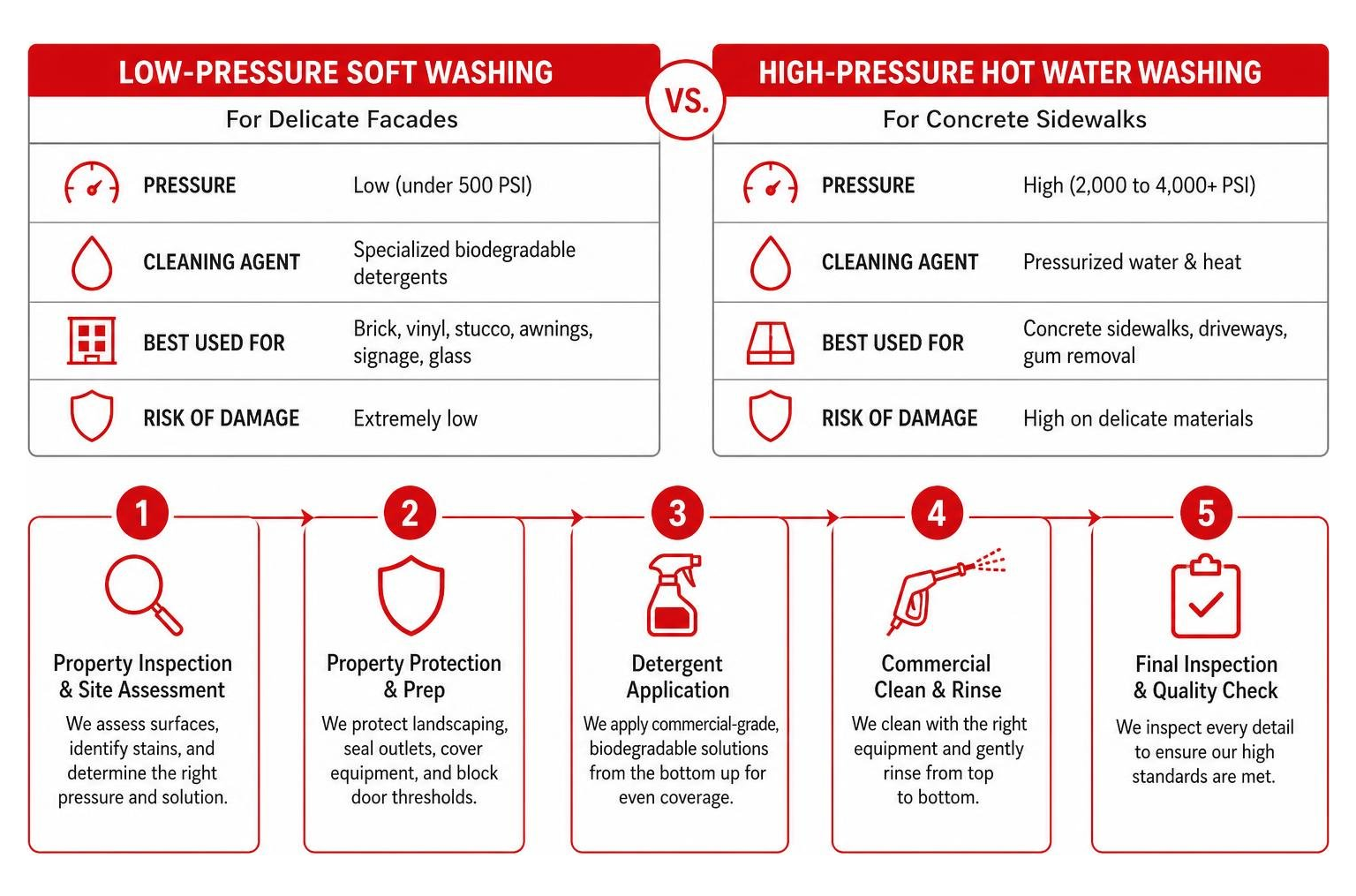
- Step 1: Property Inspection & Site Assessment: Before we spray a single drop of water, we conduct a comprehensive walkthrough of your property. We identify sensitive areas, assess the types of stains present, such as grease near a restaurant door versus heavy pollen on a retail awning, and determine the exact pressure and chemical blend needed.
- Step 2: Property Protection & Prep: We take property protection seriously. Our team pre-wets surrounding landscaping and plants to dilute any detergent runoff. We seal exterior electrical outlets, cover HVAC units, protect outdoor security cameras, and place heavy towels at door thresholds to prevent water intrusion.
- Step 3: Detergent Application: We apply our commercial-grade, biodegradable cleaning solutions systematically from the bottom up, ensuring even coverage on building facades, sign bands, and entryways.
- Step 4: Commercial Clean & Rinse: Utilizing specialized flat-surface cleaners for concrete and low-pressure nozzles for building walls, we wash away the loosened grime, working from top to bottom.
- Step 5: Final Inspection & Quality Check: We perform a final walkthrough to ensure every window frame, sidewalk corner, and breezeway meets our strict standards of cleanliness.
Cleaning Frequency, Costs, and Disruption
To keep your storefront retail-ready, how often should you schedule this service? As a general rule, storefronts in high-traffic commercial zones benefit from professional washing every 3 to 6 months. High-traffic businesses like restaurants, cafes, or grocery stores often require monthly or bi-weekly cleanings to manage grease buildup, food spills, and rapid dirt accumulation.
When it comes to budgeting, most single-storefront cleanings range from $250 to $500, depending on the size of the property, the surface materials, and the severity of the staining.
We understand that running a business requires minimizing operational disruptions. That is why professional storefront cleaning is highly flexible. Most projects only take 1 to 3 hours to complete, and we routinely schedule our services during off-hours, such as early mornings, late evenings, or weekends, so your customers never have to walk through a work zone.
Soft washing is also useful beyond storefronts, especially in Middle Tennessee neighborhoods where pollen, algae, and humidity can quickly make exterior surfaces look neglected. For more context on why delicate surfaces respond better to controlled cleaning than aggressive pressure, G Home explains the value of a soft touch instead of a pressure blast for exterior maintenance.
Frequently Asked Questions About Storefront Cleaning
Maintaining a commercial exterior comes with plenty of questions.
What storefront surfaces and materials can be safely cleaned?
With the right combination of soft washing and hot-water pressure washing, almost any exterior commercial surface can be safely restored, including:
- Brick and Masonry: Gently soft-washed to protect aging mortar joints.
- Glass and Window Frames: Cleaned using low pressure and squeegee finishes for a streak-free shine.
- Awnings and Signage: Safely cleared of bird droppings, cobwebs, and dust without tearing fabric or damaging electrical components.
- Concrete and Sidewalks: Deep-cleaned using high-pressure surface cleaners to erase gum and oil.
- Stucco and Wood: Safely treated with soft wash detergents to eliminate dark algae streaks.
How do I choose the right professional storefront cleaning company?
When hiring a team to clean your commercial property, look for the following essential credentials:
- Liability Insurance: Ensure the company carries at least $1,000,000 in liability insurance to protect your property and assets.
- Industry Experience: Look for a team with established local roots and extensive commercial experience.
- Eco-Friendly Products: Verify that they use biodegradable, non-toxic cleaning solutions safe for public pedestrian areas.
- Satisfaction Guarantee: Choose a contractor who stands behind their work and offers clear, upfront communication.
Can professional cleaning remove graffiti and chewing gum?
Yes! Hardened chewing gum and unsightly graffiti are two of the most common eyesores for retail businesses. Chewing gum is easily melted and lifted using high-temperature, hot-water pressure washing. For graffiti, we utilize specialized, surface-safe chemical solvents matched specifically to the underlying material, such as brick, concrete, or metal, to dissolve the spray paint without damaging the building itself.
Conclusion
Your storefront is the physical handshake of your business. Keeping it clean, safe, and inviting is one of the smartest investments you can make to protect your brand and drive sales.
At G Home, we bring over 25 years of industry experience to commercial properties across Middle Tennessee. We understand the unique challenges of our local climate, from heavy spring pollen to humid summers that fuel rapid algae growth. Whether your business is located in Smyrna, Nolensville, Nashville, Franklin, Brentwood, Hendersonville, or Murfreesboro, we are here to provide stress-free, professional exterior maintenance tailored to your schedule.
Ready to transform your business’s first impression? Contact our professional storefront cleaning technicians and let us handle the dirty work!