
A Quick Start Guide to New Home Construction Cleanup
Why New Home Construction Cleanup Matters Before You Move In
New home construction cleanup is the process of removing construction dust, debris, adhesive residue, paint overspray, and trade waste from a newly built home before anyone moves in.
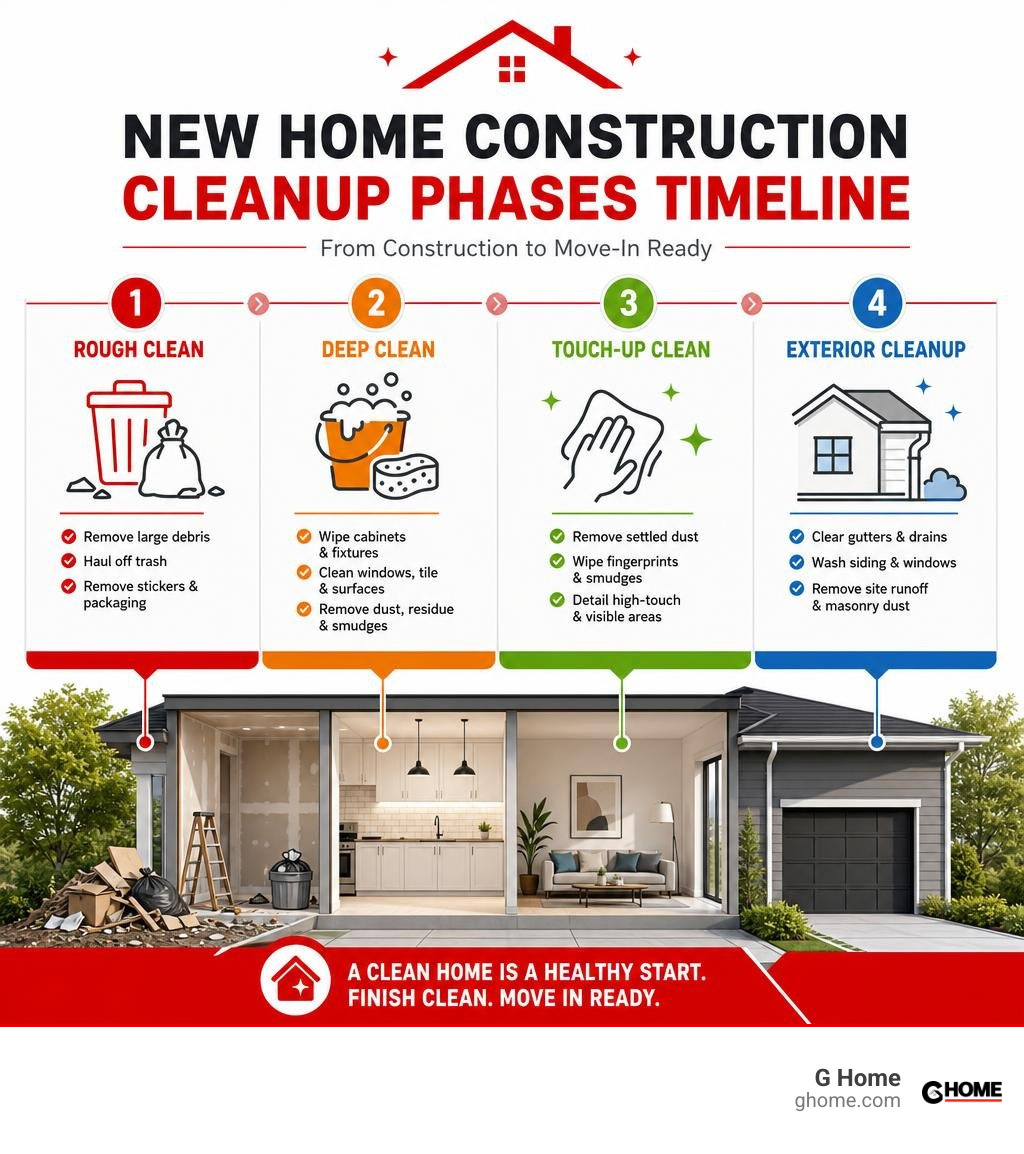
Here is a quick overview of what it involves:
| Step | What Happens |
|---|---|
| Rough clean | Remove large debris, trash, stickers, and packaging |
| Light deep clean | Wipe cabinets, fixtures, windows, tile, and surfaces |
| Touch-up clean | Remove settled dust and fingerprints right before move-in |
| Exterior cleanup | Clear gutters, wash siding, remove site runoff and masonry dust |
The key things to know:
- Builder “final cleans” often focus on presentation, not deep sanitation
- A real post-construction clean usually requires a multi-hour, multi-phase process for an average home
- Fine silica dust, drywall particles, and chemical fumes stay hidden in cabinets, vents, and surfaces long after contractors leave
- Final cleanup scope depends on square footage, debris volume, finish materials, and how much the builder already removed
- Schedule your clean after the builder’s punch list is complete and paint touch-ups have dried
Most new homeowners assume a brand-new build is clean. It isn’t. Opening a kitchen cabinet on move-in day to find sawdust is a common experience that a proper post-construction clean prevents.
At G Home, our experienced local team helps homeowners protect and prepare their properties with practical exterior care and maintenance support. Through that work, we’ve seen how skipping proper new home construction cleanup leads to ongoing air quality issues, damaged finishes, and expensive fixes down the road. Read on for everything you need to know to get your new home truly move-in ready.
Understanding Post-Construction Cleaning and Builder Responsibilities
When contractors wrap up a project, they focus on meeting building codes, completing architectural specifications, and passing municipal inspections. Their primary goal is handing over a structurally sound house, not turning it into a polished living environment.
Understanding where the builder’s legal responsibility ends and where your detailed cleanup begins is essential. Most builder contracts specify that the site will be left in broom-swept condition. This means big trash piles are hauled off and subfloors are swept, but fine particles, chemical films, and lingering trade messes remain untouched. For safety context, OSHA provides guidance on respirable crystalline silica, which is one reason fine construction dust should be handled with the right equipment instead of dry sweeping.
Why Builder Cleanup Is Not Enough
Production builders across Middle Tennessee cities like Nashville, Franklin, and Brentwood typically allocate a very brief presentation clean before the buyer’s final walkthrough.
During this brief sweep, cleaners wipe off visible countertop dust, mop central pathways, and clean main windows so the home looks striking in bright sunlight. However, this superficial effort leaves huge amounts of trade residue untouched:
- Sawdust and drywall powder settled inside closed kitchen cabinets, bathroom drawers, and vanity bases
- Plaster gunk, caulk smears, and painter overspray dried on window frames, glass corners, and threshold tracks
- Fine silica dust trapped inside wall outlets, light fixture housings, and HVAC returns
- Protective films, manufacturer stickers, and adhesive glue left on newly installed appliances and bath fixtures
When you turn on your central AC system for the first time, all that hidden dust circulates straight into your living spaces and bedroom air.
Post-Construction Cleanup vs Regular House Cleaning
Many homeowners wonder why a standard weekly maid service or move-in maid crew cannot handle post-build cleanup. The difference lies in the types of dirt, equipment required, and labor intensity.
Standard residential cleaning deals with organic dust, kitchen grease, and everyday living wear. In contrast, new home construction cleanup targets industrial residues like microscopic drywall particulates, masonry dust, grout haze, silicone caulk splatters, and heavy adhesive films.
Using regular cleaning methods on fresh builds can actually cause permanent damage. For instance:
- Dry sweeping fine drywall dust simply redistributes microscopic silica back into the air.
- Over-wetting drywall dust creates a thick plaster paste that smears across walls and plugs wood grain.
- Standard household vacuums lack proper HEPA filters, allowing micro-particles to blow right out of the vacuum exhaust back into the room.
- Aggressive scrubbing sponges can permanently scratch new low-E window coatings, delicate marble, or fresh floor coats.
Professional post-construction teams use commercial-grade HEPA vacuums, pH-neutral cleaners designed for fresh finishes, and specialized scraping tools to preserve new materials while removing tough building residues.
The Three Essential Phases of New Home Construction Cleanup
Executing a successful clean requires a multi-phase workflow aligned with your construction schedule. Attempting a single deep clean while tradespeople are still installing trim or painting walls leads to wasted time and money.
Phase 1: The Rough Clean
The rough clean takes place immediately after major framing, electrical, plumbing, drywalling, and initial painting finishes are complete, but before delicate flooring or final fixtures are detailed.
The main objective of Phase 1 is clearing bulk trash and preparing subfloors. Tasks include:
- Removing leftover lumber scraps, drywall offcuts, metal shavings, and packaging materials
- Sweeping and vacuuming subfloors so wood, tile, or carpet underlayments lie flat
- Peeling protective plastic sheeting and large manufacturer stickers from windows, tubs, and doors
- Clearing major trash and sweeping garage bays, porches, and entry steps
Removing bulk waste early allows flooring installers and trim carpenters to finish their work cleanly without grinding rough debris into brand-new surfaces.
Phase 2: The Light Deep Clean
Phase 2 is the most intensive stage of the entire project. It takes place after all trades have finished their work and the builder’s punch list is complete. This phase turns a raw construction site into a spotless home.
During the light deep clean, every single square inch of the home receives detailed attention:
- High-to-low dusting: Ceilings, fan blades, recessed lighting cans, crown molding, and high shelves are dusted first so falling particles settle on uncleaned lower surfaces.
- Cabinet and drawer detailing: Vacuuming and hand-wiping the interiors, tops, and exterior doors of every cabinet, drawer, and closet shelf.
- Fixture and glass care: Polishing light fixtures, mirrors, glass shower enclosures, and window tracks, as well as scrubbing away grout haze on new bathroom tiles.
- Surface sanitization: Sanitizing kitchen counters, sinks, backsplashes, appliance interiors, and bathroom porcelain.
Relying on structured workflows ensures no surface is overlooked during this intensive phase.
Phase 3: The Touch-Up Clean
Even after a deep clean, airborne drywall particles can float in the air for 24 to 48 hours before settling onto flat surfaces. Additionally, sub-contractors returning for final minor punch-list paint repairs can leave fresh fingerprints and scuffs.
Phase 3 happens 1 to 2 days before move-in or closing. It involves:
- Wiping down flat horizontal surfaces, counter edges, and window sills to catch newly settled dust
- Buffing out handprints, smudges, and shoe scuffs from doors, light switches, and hard floors
- Performing a final HEPA vacuuming pass across all carpets and hard surface floors
- Giving glass doors and mirrors a final streak-free polish
Checklist, Costs, and Hidden Problem Areas
Having a clear checklist keeps the project organized and ensures no hidden spot gets forgotten.
Key Checklist Items for New Home Construction Cleanup
A thorough post-build checklist covers four primary zones inside the home:
- Kitchen: Vacuum and wipe cabinet interiors/exteriors; remove protective film from stainless steel appliances; polish faucets; clean counter perimeters and island overhangs; wipe baseboards and floor trim.
- Bathrooms: Scrub grout haze off wall and floor tiles; disinfect toilets, sinks, and tubs; remove sticker adhesives from glass and porcelain; wipe vanity drawers inside and out.
- Living Areas and Bedrooms: Wipe window sills, tracks, and frames; dust ceiling fans and light fixtures; clean door jambs, knobs, and switch plates; HEPA-vacuum baseboards and carpet edge tracks.
- Utility and Laundry Rooms: Detail washer/dryer hookups; wipe water heater exteriors; vacuum HVAC return vents; clean utility sinks and storage shelving.
Hidden Problem Areas Builders Often Miss
When inspecting your build or guiding a cleaning crew, look out for these frequently neglected areas:
- Tops of kitchen cabinets and tall door frames: Construction dust floats upward and forms a thick layer on high horizontal ledges that standard walkthroughs miss.
- HVAC return grilles and duct openings: Drywallers often run heat or AC during wall sanding, pulling fine powder deep into ductwork.
- Window tracks and weep holes: Plaster, caulk, and exterior dirt easily clog lower window tracks, leading to sticking sills and drainage leaks.
- Light fixture housings: Dust gathers inside glass globes and recessed ceiling cans, casting shadows and burning when lights heat up.
Average Costs and Execution Timelines
Post-construction cleaning prices depend on total square footage, regional labor rates, debris volume, and property layout. Across Middle Tennessee markets like Nolensville and Murfreesboro, costs align closely with common industry ranges.
| Home Size (Sq Ft) | Cleanup Scope | Typical Labor Factors | Crew Considerations |
|---|---|---|---|
| Under 2,000 sq ft | Light to moderate detailing | Fewer rooms, shorter cabinet and window runs | Often manageable with a small crew |
| 2,000 – 3,000 sq ft | Full interior deep clean | More bathrooms, closets, fixtures, and flooring transitions | May require coordinated room-by-room work |
| 3,000 – 4,000 sq ft | Larger whole-home detail | More high ledges, windows, trim, and built-ins | Benefits from multiple trained technicians |
| 4,000 – 5,000+ sq ft | Large or custom-home cleanup | More specialty finishes and hidden dust zones | Often needs staged rough, detail, and touch-up visits |
Labor drives most post-construction cleaning cost because the work is detail-heavy and finish-sensitive. Debris disposal, heavy trash hauling, specialty surface care, and exterior cleanup can all change the final estimate. Understanding these scope factors helps homeowners analyze project budgeting alongside overall post-construction cleaning cost insights for accurate move-in planning.
Exterior Maintenance and Building Envelope Protection
Interior cleanliness is only half the battle. Construction projects leave exterior siding, roofs, gutters, and hardscapes coated in red clay, mortar splatter, concrete wash, and dirt.
Exterior Cleaning and Gutter Care
During construction, roofing crews toss shingle cutoffs, roofing nails, packaging plastic, and stray grit directly off roof edges. Rain then washes this grit into your new gutters.
Leaving construction dirt in new gutters causes immediate blockages, leading to rainwater overflowing onto fresh foundation landscaping, flowerbeds, and brick siding.

Washing exterior siding requires care. New brick, stucco, stone veneer, and vinyl siding can easily be damaged by high-pressure power washing. Gentle low-pressure exterior cleaning safely removes clay splatters, masonry dust, and chemical residues without blasting water behind fresh home siding or breaking window seals.
Preventing Future Maintenance Issues
Once your new roof and gutters are cleared of initial build waste, protecting them long-term saves substantial money and hassle. Installing quality micro-mesh gutter protection prevents leaves, pine needles, and roof grit from clogging your system again.
By combining custom exterior washdowns with robust gutter protection, homeowners can prevent future gutter-cleaning needs and reduce long-term maintenance expenses significantly. G Home installs gutter protection technology backed by a 25-year leading manufacturer, trusted on over 1.6 million homes, and trusted by major home improvement centers such as The Home Depot, Lowe’s, Costco, and Amazon.
Scheduling, DIY vs Professional Care, and Prep Work
Proper timing and basic property prep ensure your cleanup runs smoothly without unexpected delays.
Preparing Your Property for New Home Construction Cleanup
Before your cleaning team arrives, make sure the property is properly set up:
- Confirm utility connections: Ensure running water, electricity, and functional lighting are turned on throughout the entire home.
- Run the HVAC system: Keep the AC or heating system running at normal operating temperatures for at least 24 to 48 hours beforehand to help draw out lingering humidity and force floating dust into return filters.
- Clear out trades: Verify that all painters, trim carpenters, and floor installers have completely finished their work and removed their equipment.
- Keep pets off-site: Keep dogs and cats off the property during cleanup to protect them from airborne fine dust and open exterior doors.
Professional Services vs DIY Approach
While handling your own cleanup might seem like an easy way to save money, tackling post-build dust yourself is surprisingly difficult.
DIY cleanup requires investing in specialized safety gear like N95 or P100 dust respirators, safety goggles, heavy work gloves, commercial wet/dry vacuums equipped with true HEPA filters, extension poles, microfiber tack cloths, and non-abrasive scraping blades.
Without commercial equipment, a DIY clean on an average 2,500-square-foot home can take an inexperienced homeowner multiple long work sessions spread across several days. Following structured post-construction cleaning tips helps organize tasks logically so critical details remain managed from start to finish.
Coordinating Local Middle Tennessee Property Services
For homeowners building or remodeling across Middle Tennessee towns like Smyrna, Hendersonville, and Nolensville, climate factors like heavy spring rainfall and clay dust demand reliable, locally experienced care.
When it comes to full exterior maintenance, our local team at G Home provides complete residential care tailored specifically for Tennessee properties. Coordinating those services early helps keep siding, gutters, and drainage areas clean after the interior punch-list work is complete.
Professional gutter protection can be especially useful once the initial construction debris has been cleared. A properly fitted gutter protection system helps keep leaves, pine needles, roof grit, and storm debris from blocking drainage around a new home’s foundation.
Blog-style maintenance education belongs in the planning stage too, not as an afterthought. Homeowners can use practical post-build exterior care guidance to decide when to clean siding, check drainage, and schedule seasonal upkeep before Tennessee rain and clay stains create bigger problems.
Sealing and Protecting Exterior Hardscapes
New concrete driveways, stone patios, composite decks, and wood fences undergo heavy wear during construction. Concrete delivery trucks, contractor boots, and equipment trailers frequently leave oil drips, tire marks, and red clay stains.
Protecting these fresh surfaces right away prevents moisture penetration, cracking, and premature weathering. Sealing hardscapes after the heavy construction traffic ends helps protect driveways, decks, fences, and patios against oil spills, UV fading, and heavy Tennessee rain cycles.
Homeowners can also benefit from broader seasonal maintenance planning after move-in. Professional pressure washing and soft washing can remove red clay, dust, mildew, and construction residue from siding, patios, walkways, and other exterior surfaces without damaging fresh finishes. Blog content about exterior cleaning schedules, gutter care, and hardscape protection can help new owners understand what needs attention first and what can wait until the next maintenance season.
Professional Gutter Services for New Builds
Ensure your new construction includes adequate drainage systems capable of handling heavy rain downpours. Inspecting new gutter installations, verifying downspout placement, and scheduling regular maintenance keeps rainwater flowing safely away from your home’s foundation and prevents costly soil erosion around fresh landscaping.
Frequently Asked Questions About Construction Cleanup
Who is responsible for cleaning up after home construction?
The primary builder or general contractor is legally responsible for clearing major structural waste, hazardous construction scrap, paint cans, and heavy debris as outlined in your build contract.
However, detailed deep cleaning, fine silica dust HEPA vacuuming, interior cabinet wiping, and detailed window polishing fall under the homeowner’s responsibility unless explicitly itemized as a professional deep-clean addendum in your purchase agreement.
How long does a post-construction clean typically take?
For a standard single-family home between 2,000 and 3,000 square feet, a complete deep clean usually takes 8 to 12 total labor hours.
Professional cleaning crews consisting of 2 to 3 trained technicians can typically complete this work in 4 to 6 hours on-site. Larger custom estates exceeding 4,000 square feet frequently require multi-day visits split between rough cleans, deep surface detailing, and touch-up passes.
When should post-construction cleaning be scheduled relative to closing?
The ideal window for scheduling a post-construction deep clean is 2 to 4 days after the builder completes their final punch-list items and 1 to 2 days before your official closing and furniture delivery.
Scheduling work after punch-list paint touch-ups ensure you won’t have contractors walking through during your clean, while leaving a 24-hour buffer allows airborne dust particles to fully settle before your final touch-up pass.
Conclusion
Building a custom home or moving into a newly constructed residence is an exciting milestone. By taking a proactive approach to new home construction cleanup, you protect your family’s health, safeguard your HVAC air quality, and keep your high-end finishes looking brand new.
From detailed interior dust removal to exterior soft washing, gutter protection, and hardscape sealing, taking care of your investment right from day one gives you true peace of mind.
When you are ready to protect your home’s exterior envelope and prepare your property for years of worry-free living, contact our professional new home cleanup specialists at G Home for service across Middle Tennessee.