


Why Exterior Brick Cleaning Is Essential for Your Home’s Health and Curb Appeal
Exterior brick cleaning is one of the most important, and most often overlooked, parts of maintaining a Middle Tennessee home. While many homeowners see it as a simple weekend project, brick and mortar need careful handling to prevent long-term damage.
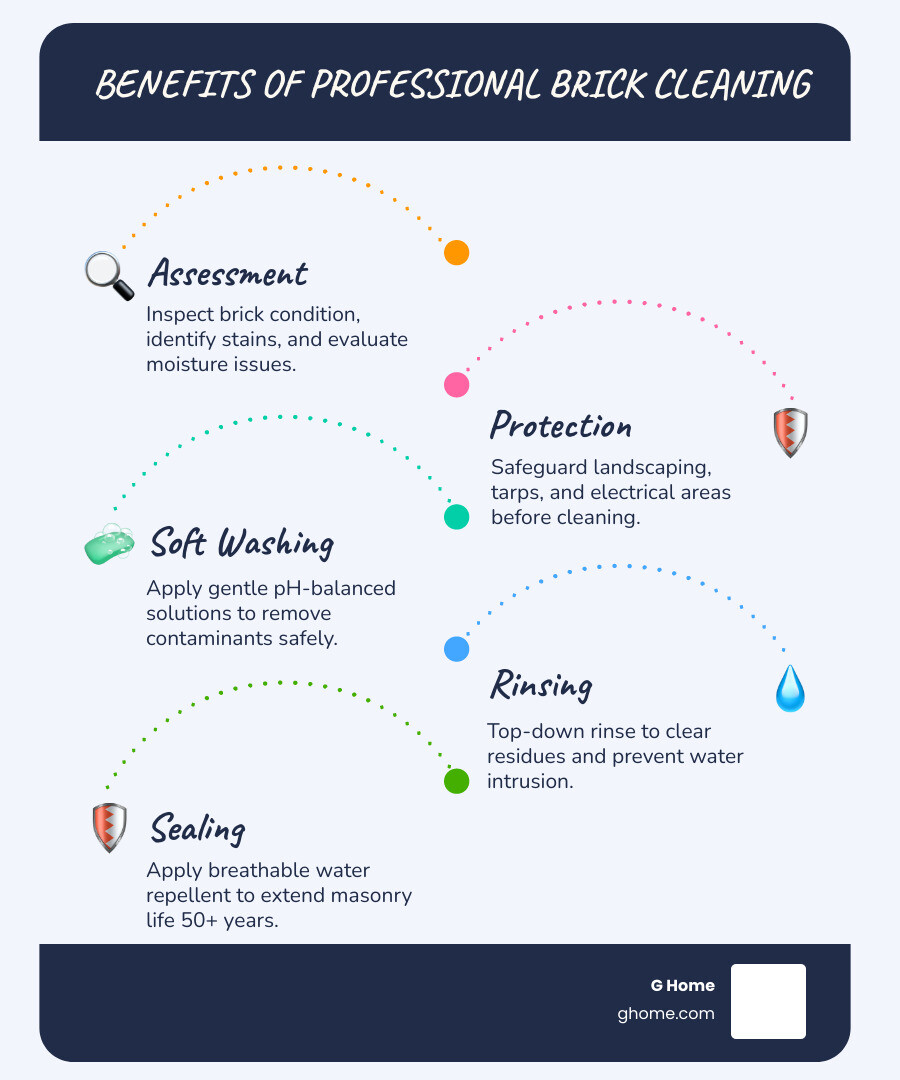
The G Home Professional Brick Cleaning Process:
- Professional Inspection: We assess brick and mortar integrity for cracks or structural issues.
- Site Protection: Our teams secure plants, windows, and electrical outlets with specialized covers.
- Pre-saturation: We hydrate the brick surface to prevent deep chemical absorption.
- Precision Application: We apply a pH-balanced, brick-safe cleaning solution tailored to your specific contaminants.
- Low-Pressure Rinse: We rinse thoroughly from top to bottom using professional-grade soft wash equipment.
- Final Evaluation: We allow the surface to dry fully before performing a quality check on the results.
Brick looks tough — and it is. But it’s also porous. That means dirt, mold, mildew, algae, and moisture all work their way into the surface over time. In Middle Tennessee’s warm, humid climate, that buildup happens faster than most homeowners expect.
If you leave it alone, the problem can become more than cosmetic. Brick is porous, so trapped moisture can expand in cold weather and lead to spalling, where the brick surface starts to flake or break away. Regular professional cleaning does more than improve curb appeal. It helps protect your home’s structure.
The good news is that with the right approach, brick exteriors can stay clean, strong, and attractive for decades. The key is using methods that protect the surface, because the wrong ones, like high pressure, harsh chemicals, or wire brushes, can permanently damage both the brick and the mortar joints that hold it together.
Improper brick cleaning techniques can damage your masonry, a warning consistently shared by masonry professionals across the industry.
With over 25 years of experience in exterior home services, G Home has seen how exterior brick cleaning done the right way helps protect your home’s value and reduce the risk of costly repairs later. Let’s walk through what that looks like.
Soft Washing vs. Pressure Washing: Choosing the Right Method for Exterior Brick Cleaning
When we talk about exterior brick cleaning, the most common mistake we see in Nashville and Franklin is the “blast it with everything you’ve got” mentality. While homeowners can rent high-powered pressure washers, cranking them up to 3,000 or 4,000 PSI is a recipe for disaster.
Brick and mortar are surprisingly delicate. High pressure can strip the “fines” (the smooth outer finish) off the brick, leaving it even more porous and prone to getting dirty again. Worse, high pressure can erode the mortar joints, leading to water intrusion behind the brick wall. Modern brick homes actually use a drainage wall system that allows the house to “breathe.” If you force water into those joints with high pressure, you’re bypassing that system and inviting mold into your wall cavities.
At G Home, we advocate for the “Soft Touch.” This involves using specialized, eco-friendly cleaning solutions that break down organic growth at the source, followed by a low-pressure rinse. Our professional equipment allows for precise PSI control that consumer-grade rentals simply cannot match.
| Feature | High-Pressure Washing | Soft Washing (G Home Method) |
|---|---|---|
| Pressure (PSI) | 2,500 – 4,000+ | Under 1,000 (often 500-800) |
| Cleaning Agent | Water force alone | pH-balanced specialized detergents |
| Mortar Risk | High (erosion and cracking) | Very Low |
| Surface Impact | Risk of spalling/scarring | Preserves original texture |
| Longevity | Surface level only | Kills spores; lasts longer |
Understanding the soft washing vs pressure washing debate is important for homeowners in Middle Tennessee. In a humid climate, simply blasting away algae often removes only the surface stain while leaving behind the growth that caused it. That means green or black streaks can come back quickly. Soft washing treats the growth at the source, helping brick stay cleaner longer.
The Professional Approach to Exterior Brick Cleaning
While a DIY weekend project sounds tempting, professional exterior brick cleaning is about more than just a hose and some soap. It’s a systematic process designed to protect your investment. When our teams arrive at a home in Brentwood or Hendersonville, we follow a strict protocol to ensure the safety of your property.
Preparation and Surface Protection
The first step isn’t cleaning; it’s protection. We start by hydrating your landscaping. Plants are sensitive to cleaning solutions, so we thoroughly saturate the soil and leaves with fresh water. This creates a protective barrier so that any runoff doesn’t soak into the plant’s system. We then use tarps to cover delicate flower beds and shrubs.
Electrical safety is another major concern. We identify all outdoor outlets, light fixtures, and security cameras, ensuring they are properly covered or avoided. For more on why your home deserves this level of care, check out Why Your Home Deserves a Soft Touch and Not a Pressure Blast.
The Cleaning and Rinsing Phase
Once the area is secure, the real work begins. We pre-saturate the brick with water. Why? Because dry brick is like a sponge. If you apply cleaning solution to dry brick, it sucks the chemicals deep into the pores where they are hard to rinse out. By wetting the brick first, the cleaner stays on the surface where the stains are.
We then apply our customized detergents and allow for “dwell time.” This is where the magic happens. The solution eats away at mold, mildew, and dirt without the need for abrasive scrubbing. Finally, we perform a top-down rinse. This ensures that all residue flows downward and is completely removed from the surface. Our Soft and Pressure Washing services are tailored specifically for the types of brick common in Middle Tennessee.
Identifying and Treating Common Brick Contaminants
Not all stains are created equal. Depending on where you live in the Nashville area, your brick might be facing different enemies. Identifying these contaminants correctly is the first step in our professional service, ensuring the right chemical balance is used for your specific brick type.
Removing Organic Growth and Efflorescence
In shaded areas or on the north side of homes, mold and mildew are the primary culprits. These organic growths trap moisture against the brick, which is the leading cause of structural degradation over time.
Then there’s efflorescence. If you’ve noticed a white, chalky film on brick, it’s usually not mold, it’s salt deposits left behind as moisture travels through the masonry and evaporates at the surface. It’s often more of a warning sign than a serious defect, since repeated buildup can point to excess moisture or drainage issues. Our residential services team can help determine whether it’s a simple surface problem or a clue to a deeper water-management concern. You can also learn more on understanding brick stains and residue on our blog.
Tackling Rust and Red Clay in Exterior Brick Cleaning
In Middle Tennessee, we have a unique challenge: red clay. This iron-rich soil can splash up onto the lower courses of brick during heavy rains, leaving stubborn orange stains. Similarly, iron from irrigation systems or metal fixtures can cause rust streaks.
Removing these stains usually calls for specialized, pH-balanced cleaners. The wrong acid, such as muriatic acid, can damage brick or leave behind a yellow discoloration. G Home uses professional-grade solutions designed to draw iron and red clay from the brick’s pores without damaging the masonry, offering a safer and more effective result than most DIY approaches.
Long-Term Care and Post-Cleaning Best Practices
After a professional exterior brick cleaning, your home will look transformed. But the work doesn’t stop there. To extend the life of your brickwork by up to 50 years, you need a long-term maintenance plan.
One of the most frequent questions we get is about sealants. Should you seal your brick? The answer is: it depends. You should never use a “film-forming” sealer that creates a plastic-like coat. This traps moisture inside the brick, which will cause it to freeze and explode (spalling) during our Tennessee winters.
Instead, we recommend breathable water repellents. These allow water vapor to escape from the inside while preventing liquid water from soaking in from the outside. This is your best defense against the freeze-thaw cycle.
Annual inspections matter too. Check your gutters, because clogged gutters often cause brick stains when overflowing water runs down the side of the house. Keeping your gutters clean is one of the simplest ways to protect your brick and keep it looking its best.
Why Professional Expertise Matters for Masonry
Why choose a professional service like G Home for your exterior brick cleaning? It comes down to experience and equipment. We have over 25 years of experience navigating the specific climate challenges of Nashville, Murfreesboro, and surrounding areas.
A DIY mistake can be permanent. Whether it’s “wand marks” etched into the brick from a high-pressure nozzle or chemical burns from hardware-store acids, masonry repairs are expensive. Our technicians use professional-grade equipment that allows us to control pressure and temperature precisely. We don’t just “clean” your home; we curate a treatment plan based on the age and type of your brick. Learn more about Our Commitment to Quality.
Frequently Asked Questions about Exterior Brick Cleaning
How often should I clean my brick exterior in Middle Tennessee?
In areas like Nashville or Murfreesboro, where humidity is high and pollen is heavy, we recommend a professional G Home cleaning every 1 to 2 years. If your home is surrounded by heavy tree cover or near high-traffic roads with lots of dust and pollution, you may need an annual rinse to prevent buildup.
Is muriatic acid safe for DIY brick cleaning?
We strongly advise against DIY use of muriatic acid. It is an industrial-strength solvent that can cause severe chemical burns to your skin and permanent damage to your home’s mortar. It often causes “acid burn,” which discolors the brick. G Home professionals use buffered acids or pH-neutral cleaners that are much safer for the environment and your home.
Can high-pressure washing damage my home’s mortar?
Yes, absolutely. High pressure can blast away the outer layer of the mortar, making it sandy and brittle. Once the mortar is compromised, water can seep into the structure, leading to wood rot and mold inside your walls. This is why G Home’s soft washing is always the preferred method for older or porous masonry.
Conclusion
Your home’s brick exterior is a timeless asset, but it requires the right care to remain a source of pride. From the initial inspection to the final rinse, every step in the exterior brick cleaning process matters. By choosing a professional, soft-wash approach, you aren’t just cleaning your home—you’re preserving its history and its future.
At G Home, we take the stress out of home maintenance. Whether you are in Brentwood, Franklin, or Hendersonville, our local expertise and 25+ years of experience ensure your home receives the “Soft Touch” it deserves.
Ready to see your brick look like new again? Contact our professionals to explore our full range of soft and pressure washing services and let us help you protect your Middle Tennessee home, brick by brick.