
How to Find Professional Apartment Dryer Vent Cleaning Services
When to Clean Your Apartment Dryer Vent and Why It Matters
Apartment dryer vent cleaning is one of the most overlooked and most dangerous maintenance tasks in multi-unit housing. Here’s what you need to know right away:
Quick answers:
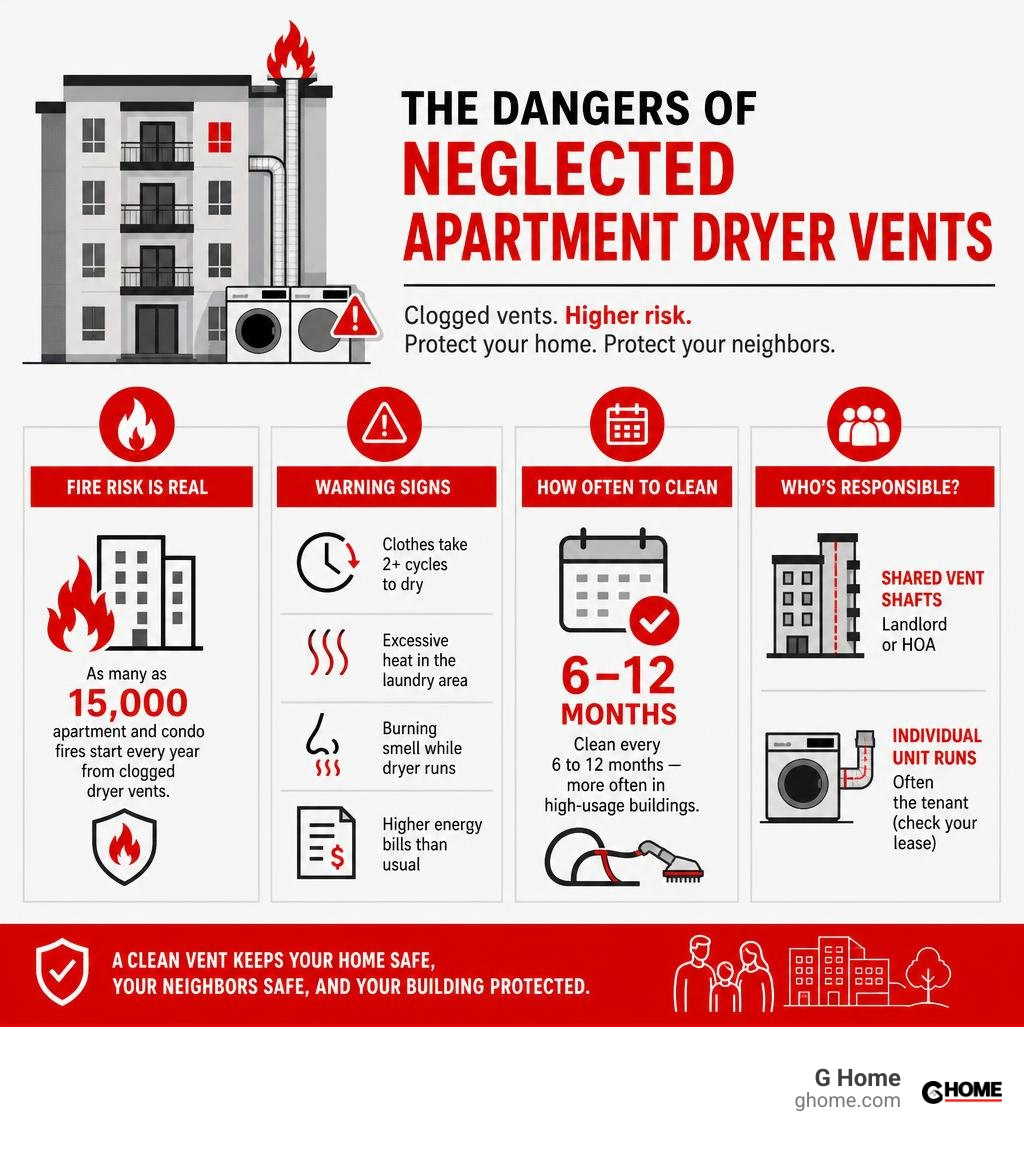
- How often? Clean apartment dryer vents every 6 to 12 months, more often in high-usage buildings
- Who’s responsible? Shared vent shafts = landlord or HOA. Individual unit runs = often the tenant (check your lease)
- Warning signs? Clothes taking 2+ cycles to dry, burning smell, excessive heat, high energy bills
- DIY or pro? Tenants can clean the short transition hose behind the dryer, but the full duct run requires a certified professional
- Why it’s urgent? As many as 15,000 apartment and condo fires start every year from clogged dryer vents
The stakes in an apartment building are higher than in a single-family home. A fire doesn’t just threaten one unit. It can spread rapidly through shared walls, ceilings, and ventilation shafts to neighboring units. One neglected vent can put an entire building at risk.
Most residents don’t think about this until something goes wrong. By then, the average property damage from a dryer vent fire already exceeds $10,000.
Why Apartment Dryer Vent Cleaning Is More Critical Than in Single-Family Homes
When you live in a single-family home, your dryer vent is usually a straightforward affair. It typically runs about 12 feet straight through an exterior wall. If a clog forms, it affects only your household, and clearing it is a simple afternoon task.
In multi-family structures across Middle Tennessee, whether you are renting a modern loft in downtown Nashville or managing a sprawling condo complex in Franklin, the setup is entirely different. The structural complexity of these buildings means that apartment dryer vent cleaning is not just an individual chore. It is a critical community safety measure.
Structural Challenges of Long Duct Runs and Shared Vents
The physical routing of dryer vents in apartments and condos presents major engineering challenges. Instead of a short, straight path to the outdoors, apartment dryer ducts often run 30 to 40 feet through interior walls, ceilings, and crawlspaces before finally venting outside.
These long horizontal and vertical runs require multiple bends and turns. Every single elbow or turn in a duct creates a point of resistance where air velocity drops. When air velocity decreases, the heavy, moisture-laden lint suspended in the exhaust stream falls out of suspension and clings to the duct walls.
Furthermore, many multi-unit buildings utilize complex configurations:
- In-Slab Ductwork: Some buildings route ducts directly through concrete floor slabs. If condensation cannot escape, moisture pools in these low points, creating a sticky paste when mixed with lint.
- False Ceilings: Cosmetic false ceilings often hide critical joints where in-slab ducts transition to standard 4-inch round ducts. These joints force rapid directional changes, causing localized blockages that are completely invisible from the outside.
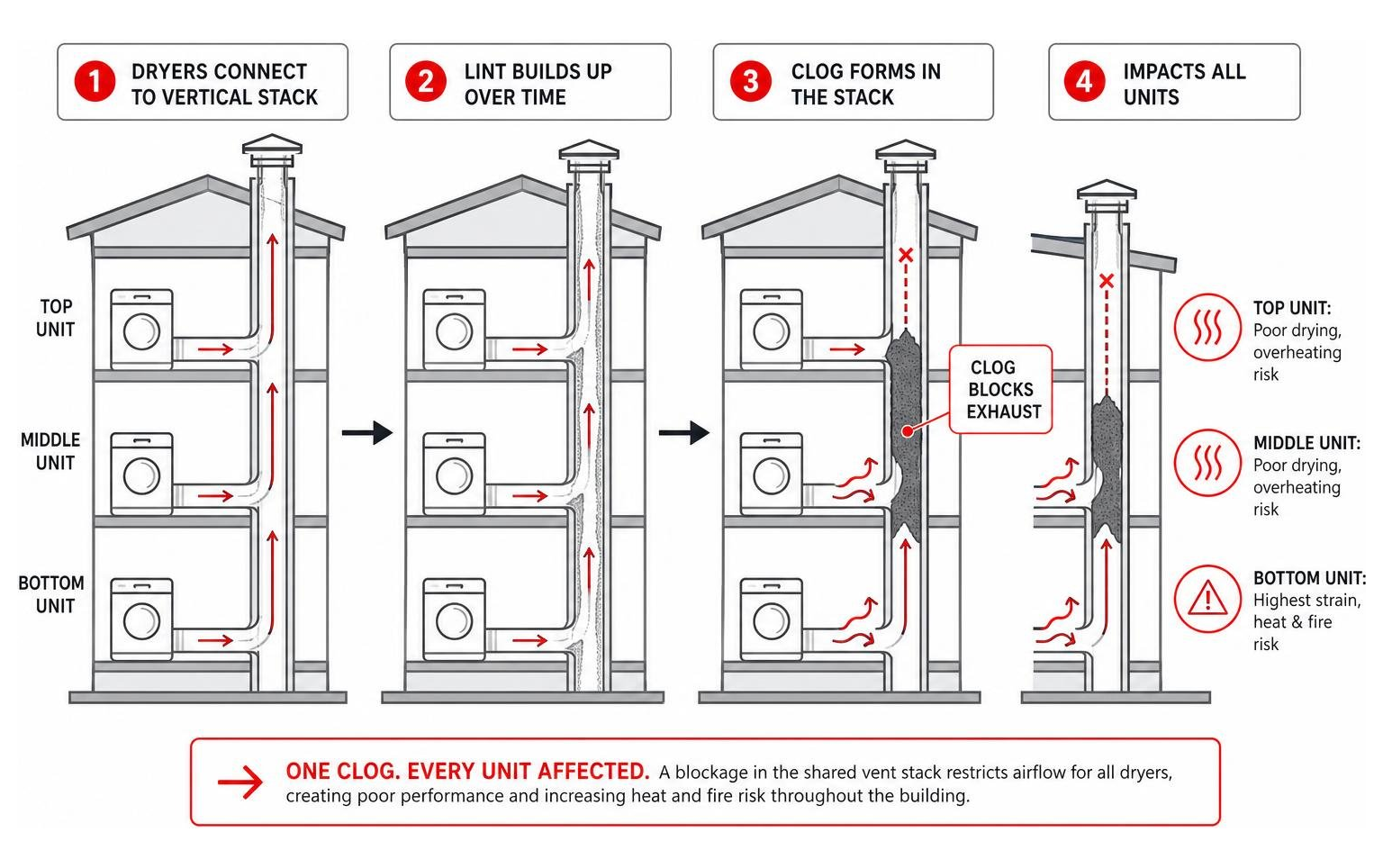
- Shared Vent Shafts: In older complexes, multiple individual dryers may vent into a single, shared vertical stack. If one resident neglects their maintenance, their lint can back up into a neighbor’s line, restricting airflow and driving up utility costs for everyone on the stack.
- Booster Fans: Because of the extreme length of these runs, many systems rely on inline booster fans to push the air all the way out. When these mechanical fans fail or get caked in lint, the entire venting system grinds to a halt.
For property managers who want one maintenance partner for exterior upkeep, G Home also provides commercial exterior maintenance services for multi-family properties across Middle Tennessee. Keeping dryer vents, gutters, and exterior surfaces on a routine schedule helps reduce emergency calls and supports a safer environment for residents.
Health and Fire Risks of Clogged Apartment Dryer Vents
The combination of long runs, restricted airflow, and high-density living amplifies both health and safety risks:
- The Fire Hazard: Lint is highly flammable. It acts as perfect tinder for sparks generated by overheated dryer motors or electric heating elements. Nationwide, nearly 17,000 home clothes dryer fires are reported annually, with clogged vents causing more than 2,900 of them. In non-high-rise apartment buildings, clothes washers and dryers cause an estimated 10% of all structure fires. Because of shared walls, a single fire can spread with terrifying speed, threatening dozens of families simultaneously.
- Toxic Mold Growth: Your dryer’s primary job is to remove water from your clothes. That water is exhausted as warm, humid vapor. When a vent is clogged, this moisture cannot escape. It condenses inside the cold ductwork within your walls. Over time, standing water pools inside the ducts, seeping into drywall and creating a perfect, dark breeding ground for toxic mold and bacteria that ruin indoor air quality.
- Carbon Monoxide Poisoning: If your apartment utilizes a gas dryer, a clogged vent is a life-threatening emergency. The blockage prevents toxic combustion byproducts, including odorless and colorless carbon monoxide (CO), from venting safely outdoors. Instead, these fumes back draft into your living space, posing a severe health risk to everyone inside.
Warning Signs and Recommended Frequency for Maintenance
Recognizing when your system is struggling is the first step toward preventing a disaster. Because these systems are hidden behind drywall, you have to rely on behavioral warning signs from your appliance.
| Normal Dryer Operation | Clogged Dryer Warning Signs |
|---|---|
| Clothes dry completely in 30 to 45 minutes | Clothes take 2 or more full cycles to dry |
| Dryer exterior feels warm to the touch | Dryer exterior or laundry closet feels excessively hot |
| Laundry area smells fresh and clean | A musty, damp, or burning smell during operation |
| Lint screen collects a normal, uniform layer of lint | Lint screen is completely clean (lint is bypassing into the duct) |
| Outside vent flap opens wide when running | Outside vent flap stays closed or barely moves |
Recognizing the Warning Signs That You Need Apartment Dryer Vent Cleaning
If you notice that a single load of towels is suddenly taking two or three cycles to dry, do not assume your dryer is simply getting old. This is the classic, textbook sign of restricted airflow.
When lint builds up, the dryer cannot exhaust the moist air. The appliance is forced to recirculate the same wet, humid air over and over. This forces the dryer to work up to 10 times harder to dry your clothes.
This restriction does more than just waste your Saturday afternoon. It forces the heating element to run continuously at maximum temperature, causing the dryer’s exterior to become dangerously hot. You may also notice a distinct musty odor (from trapped moisture) or a faint burning smell (from lint overheating near the heating element).
Furthermore, this inefficiency shows up directly on your utility bills. Restricted airflow forces the dryer to consume up to 30% more energy per load, driving up costs for residents and property managers alike.
How Often Should Apartment Dryer Vents Be Cleaned?
As a general rule of thumb, individual apartment dryer vents should be professionally inspected and cleaned at least once every 6 to 12 months.
However, certain factors require more frequent maintenance (every 6 months):
- High-occupancy units (such as apartments with roommates or large families running 5+ loads a week).
- Homes with heavy-shedding pets.
- Units with exceptionally long duct runs (over 15 to 20 feet) or multiple elbows.
- Common laundry facilities in apartment complexes, which experience continuous daily use.
Apartment managers often coordinate dryer vent care alongside other recurring property tasks, including gutter cleaning and exterior washing. Bundling those services can help keep drainage systems, siding, walkways, and laundry exhaust areas working properly through humid Middle Tennessee weather.
Adhering to National Fire Protection Association (NFPA) 211 standards for venting systems helps your property remain compliant with local building codes and insurance requirements in Middle Tennessee.
Who is Responsible for Apartment Dryer Vent Cleaning?
Determining who is responsible for scheduling and paying for apartment dryer vent cleaning can sometimes feel like solving a puzzle. The answer depends heavily on your housing type, lease agreement, and local HOA bylaws.
Landlord and HOA Maintenance Responsibilities
In rental properties, landlords are legally obligated to maintain a safe, habitable living environment. Because clogged dryer vents present a documented fire hazard and a source of mold-inducing moisture, property managers are typically responsible for maintaining the structural venting system.
Specifically, landlords and HOAs are responsible for:
- Shared Ventilation Shafts: Any common ducts or vertical stacks that serve multiple units are the sole responsibility of the building management or HOA.
- Exterior Vent Terminations: Cleaning and maintaining the exterior exhaust hoods, louvers, and bird screens, especially those located high on multi-story brick walls, must be managed by the property.
- Code Compliance: Ensuring that all transition ducts and wall penetrations meet local Middle Tennessee building codes and insurance policy requirements.
To prevent structural damage and minimize liability, smart property managers schedule building-wide, professional cleanings annually. This ensures that no single tenant’s neglect compromises the safety of the entire building.
For related property upkeep, the G Home blog offers practical maintenance advice for apartment communities and local homeowners. Articles on seasonal exterior maintenance can help managers plan around Tennessee storms, humidity, and high pollen months without turning routine issues into tenant complaints.
Tenant Daily Maintenance and Reporting Duties
While landlords handle the heavy lifting of duct maintenance, tenants have critical daily responsibilities to keep the system running safely:
- Clean the Lint Screen: Clean the dryer’s built-in lint filter before or after every single load. This screen only catches about 90% of lint; the remaining 10% always escapes into the vent duct.
- Keep the Area Clear: Maintain at least 2 to 3 feet of clear space around the dryer. Do not store cleaning chemicals, paper bags, or flammable materials next to the appliance.
- Monitor and Report: Pay attention to drying times and appliance temperatures. If you notice any warning signs, submit a formal maintenance request to your property manager immediately in writing.
DIY vs. Professional Apartment Dryer Vent Cleaning Services
When it comes to clearing out lint, many handy residents are tempted to buy a cheap brush kit online and attempt a DIY fix. While well-intentioned, DIY cleaning in an apartment setting can quickly go wrong.
The Limitations and Dangers of DIY Vent Cleaning
Tenants can, and should, safely clean the short, flexible transition hose that connects the back of the dryer to the wall outlet. However, attempting to clean the main duct run yourself carries severe risks:
- Compacting the Lint: Standard hardware store brush kits are highly flexible but lack the rigidity needed for long runs. If used improperly, they can act like a plunger, packing loose lint into a solid, rock-hard block deep inside the wall.
- Physical Duct Damage: Many older apartments use fragile plastic or foil transition ducts. Aggressive DIY brushing can easily rip or puncture these materials, venting hot, moist air and highly flammable lint directly into your wall cavities.
- Inaccessible Vents: In multi-story buildings, the exterior exhaust vent may terminate on a high roof or a sheer exterior wall. Attempting to access these without professional safety gear is incredibly dangerous.
- The Leaf Blower Myth: Never use a leaf blower or compressed air to blow out a dryer vent. The extreme pressure can burst duct joints hidden behind drywall, filling your ceiling space with lint and creating an invisible fire hazard.
What to Expect From Professional Apartment Dryer Vent Cleaning
Professional technicians utilize specialized commercial equipment and follow strict safety protocols to guarantee a completely clean system:
- Visual and Airflow Inspection: The process begins by measuring the airflow velocity (in Cubic Feet per Minute, or CFM) at both the dryer connection and the exterior exhaust. This establishes a baseline performance level.
- The Push-Pull Method: Professionals use a combination of rotary brushes and high-powered negative pressure vacuums. Specialized, spinning brushes are snaked through the entire length of the duct to knock stubborn lint and soap residue loose. At the same time, an industrial HEPA-filtered vacuum extracts the debris, ensuring no dust or allergens escape into your apartment’s living space.
- Transition Hose and Vent Cover Check: Technicians inspect the flexible connection behind the dryer, replacing outdated plastic or foil hoses with fire-safe, rigid metal ducting. They also clean the exterior vent cap to ensure the damper opens and closes freely, preventing pests like birds or mice from nesting inside.
- Final Airflow Test: A post-cleaning CFM test is performed to verify that airflow has been fully restored to factory specifications, ensuring maximum energy efficiency.
For communities comparing maintenance priorities, G Home also publishes local home exterior tips that explain how moisture, clogged drainage, and neglected exterior systems can create preventable repair costs. Pairing dryer vent cleaning with exterior inspections gives property teams a more complete view of seasonal risk before the FAQ questions below come up from residents.
Frequently Asked Questions About Apartment Dryer Vent Cleaning
Can I clean my own dryer vent in a high-rise apartment?
Generally, no. In high-rise buildings, the dryer exhaust system is integrated into the building’s complex mechanical structure. The ducts are exceptionally long, often routing through common concrete slabs or connecting to shared vertical shafts with inline booster fans.
Attempting to clean these yourself can damage common property, disrupt the building’s balanced ventilation system, or push lint directly into your neighbors’ units. High-rise venting systems require professional, licensed, and insured contractors who have the specialized high-velocity tools needed to clear these complex systems safely.
How much does professional apartment dryer vent cleaning cost?
For a single apartment unit, professional dryer vent cleaning typically ranges from $125 to $225, depending on the length of the duct run, the accessibility of the exterior vent, and whether any repairs or bird nest removals are needed.
For property managers and HOAs, scheduling bulk services for multiple units simultaneously dramatically lowers the cost per unit. This is a highly cost-effective investment that easily offsets the potential $10,000+ cost of property damage from a dryer fire.
Can a clogged dryer vent cause carbon monoxide poisoning?
Yes, if you have a gas-powered dryer. Gas dryers burn fuel to generate heat, producing carbon monoxide (CO) as a byproduct. A clean, unobstructed vent safely expels this toxic, odorless gas outdoors.
However, if the vent is clogged with lint, the exhaust gases have nowhere to go and will back draft into your apartment. Because carbon monoxide is invisible and odorless, it can quickly reach lethal levels without your knowledge. This is why annual professional inspections are absolutely vital for any household utilizing gas laundry appliances.
Conclusion
Regular apartment dryer vent cleaning is a non-negotiable part of property safety, energy efficiency, and indoor air health. Whether you are a resident wanting to lower your monthly utility bills or a property manager protecting a multi-family community, keeping these hidden ducts clear is essential.
At G Home, we understand the unique structural and climate challenges that property owners face here in Middle Tennessee. From the humid summer months in Smyrna and Nolensville to the bustling residential communities of Nashville, Franklin, Brentwood, Hendersonville, and Murfreesboro, we provide professional, stress-free exterior property maintenance backed by over 25 years of industry experience.
Let us help you keep your property safe, compliant, and operating at peak efficiency. Contact our professional apartment dryer vent cleaning technicians today to schedule routine maintenance or request a comprehensive property assessment!