
Outsourcing Your Rental Property Turnover Cleaning: In-House vs. Professional Pros
Why Every Day Your Rental Sits Vacant Costs You Money
A rental turnover service is one of the most effective tools a landlord or property manager can use to cut the time and money lost between tenants.
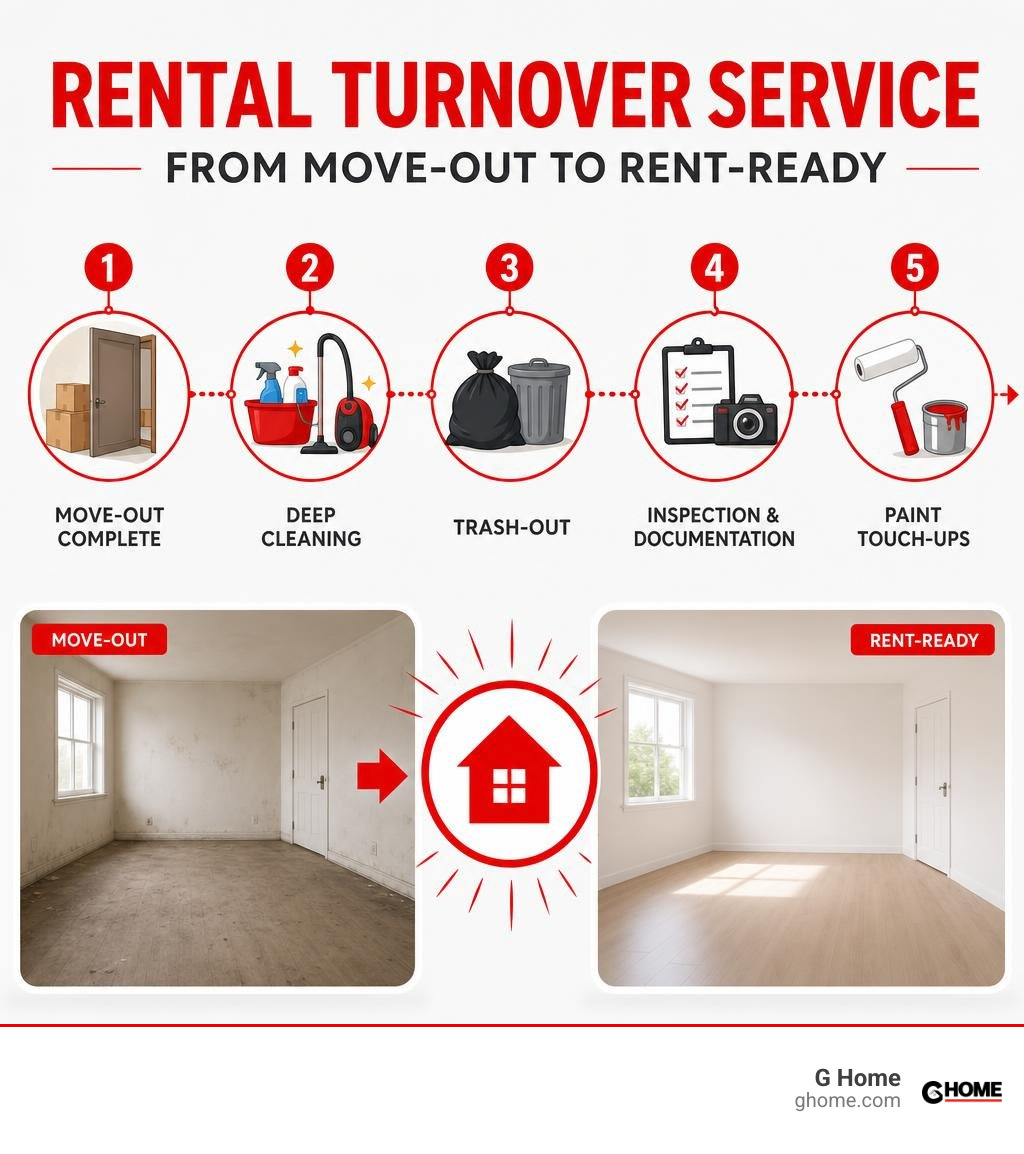
Here’s what a rental turnover service typically includes:
| Service | What It Covers |
|---|---|
| Deep cleaning | Kitchen, bathrooms, floors, appliances, and surfaces |
| Minor repairs | Patching walls, fixing fixtures, replacing hardware |
| Trash-out | Removing debris or items left behind by previous tenants |
| Inspection and documentation | Before-and-after photos for condition records |
| Paint touch-ups | Scuffs, marks, and worn wall surfaces |
The goal is simple: get the unit clean, safe, and rent-ready as fast as possible so you can stop losing income on an empty property.
Every extra day a unit sits vacant is revenue you can never get back. And in a competitive rental market, how fast you turn a unit is just as important as how well you screen tenants.
What is a Rental Turnover Service and What Does It Include?
A rental turnover service is a specialized, comprehensive solution designed to prepare a residential property for its next occupant immediately after a tenant vacates. Unlike a standard residential cleaning, a turnover service focuses on restoring the property to a baseline “rent-ready” condition. This requires a coordinated effort across multiple trades, including deep cleaning, maintenance, safety compliance, and aesthetic updates.
When a tenant moves out, they often leave behind more than just normal wear and tear. A professional turnover service addresses everything from deep-seated grime to minor structural issues. By bundling these tasks into a single service, property owners avoid the logistical headache of hiring independent cleaners, painters, and handymen.
For property managers looking to preserve the value of their investments, utilizing a structured turnover protocol is essential. Standard interior tasks typically involve deep cleaning appliances, scrubbing grout, steam-cleaning carpets, patching drywall, and changing locks to ensure security.
Exterior upkeep should be planned separately from interior make-ready work, especially in Middle Tennessee where rain, humidity, and tree coverage can affect gutters, siding, walkways, and rooflines. G Home supports that part of the turnover plan through multifamily residence exterior maintenance services that help keep rental properties looking cared for before showings.
Standard Tasks in a Rental Turnover Service Checklist
To ensure no detail is missed, professional turnover crews operate using a strict, multi-point checklist. This structured approach guarantees consistency and protects the landlord from potential compliance issues.
- Appliance Deep Cleaning: Pulling out refrigerators, ovens, and dishwashers to clean behind and underneath them, as well as thoroughly degreasing interior racks, burners, and coils.
- Wall and Paint Touch-Ups: Patching nail holes, repairing minor drywall dents, and applying matching paint touch-ups to high-traffic areas like hallways and entryways.
- Window and Track Cleaning: Scraping out dust, dead insects, and debris from window tracks, and washing both the interior and exterior glass surfaces.
Additional Services Offered by a Professional Rental Turnover Service
Beyond the baseline cleaning and maintenance, professional turnover providers often offer specialized add-on services to address unique property needs. These services are particularly valuable when dealing with challenging tenant transitions, such as evictions or long-term tenancies that require extensive restoration.
- Junk Removal and Trash-Outs: When departing tenants leave behind broken furniture, heavy trash, or personal belongings, a turnover service can execute a full trash-out to haul away debris.
- Carpet Cleaning: Deep steam extraction for heavily soiled carpets.
- Exterior Curb Appeal Enhancements: First impressions start at the curb. Professional teams can clear walkways, inspect drainage risks, and identify exterior issues that could affect leasing appeal.
For properties with heavy tree coverage, gutter condition can directly affect a rental’s readiness. Adding professional gutter cleaning to the turnover schedule helps reduce overflow, foundation concerns, and roofline problems before a new tenant moves in.
Apartment Turnover vs. Rental Turnover: Key Differences
While the terms “apartment turnover” and “rental turnover” are often used interchangeably, they represent two distinct parts of the property management lifecycle. Understanding this difference is critical for optimizing your operations and reducing vacancy times.
Apartment turnover refers specifically to the physical preparation of the vacant unit. It is the tactical, hands-on work: the cleaning, painting, and repairing required to make a specific physical space habitable and attractive again.
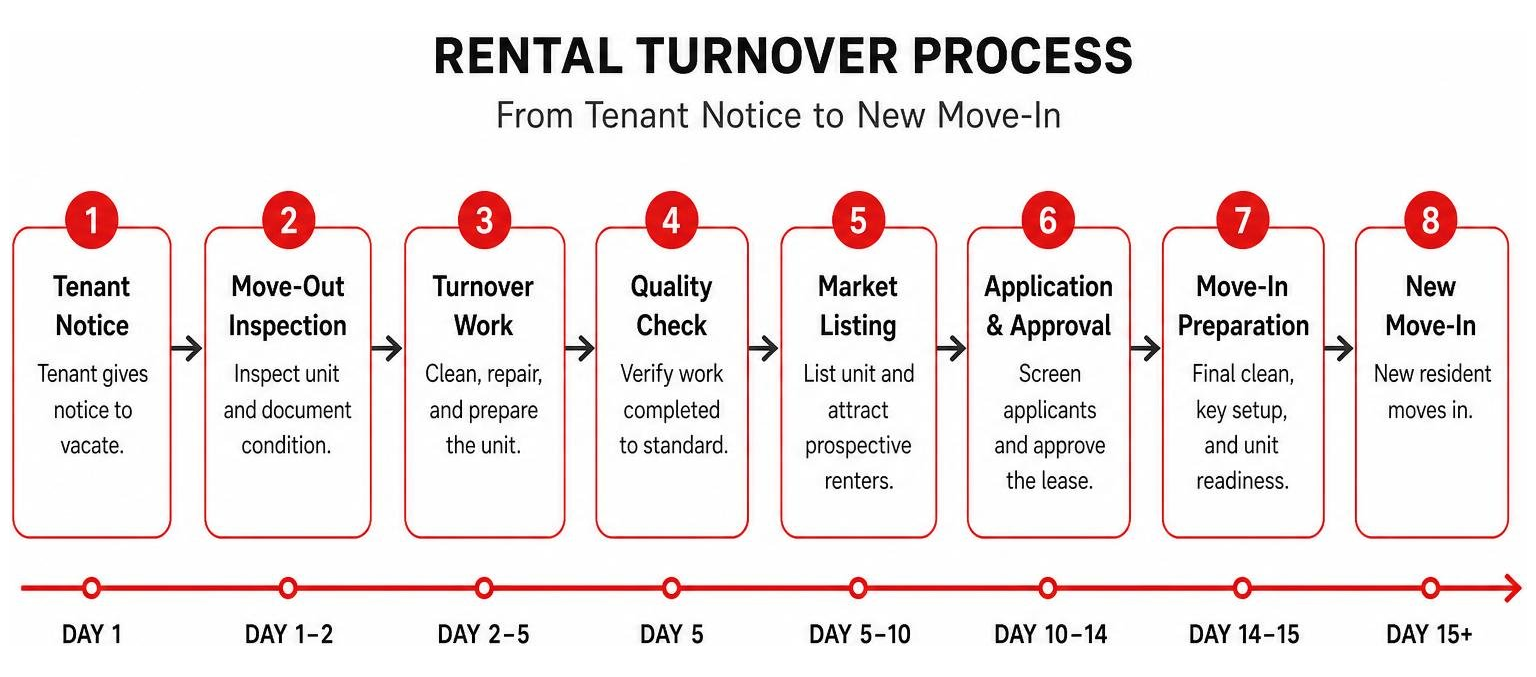
Rental turnover, on the other hand, is the macro business and leasing cycle. It encompasses the entire transition process from the moment a tenant submits their notice to vacate, through the move-out inspection, the physical apartment turnover, the marketing of the listing, lease negotiation, and finally, the move-in of the new resident.
| Feature | Apartment Turnover (Tactical) | Rental Turnover (Strategic) |
|---|---|---|
| Primary Focus | Physical restoration of the unit | The complete tenant transition lifecycle |
| Key Activities | Deep cleaning, painting, repairs, lock changes | Move-out inspections, marketing, leasing, move-in |
| Typical Duration | 2 to 5 business days | 1 to 4 weeks |
| Primary Metric | Turn speed and work quality | Vacancy rate and lost rental revenue |
| Key Stakeholders | Maintenance crews, cleaning technicians | Property managers, leasing agents, landlords |
By distinguishing between the micro physical preparation, apartment turnover, and the macro business cycle, rental turnover, property managers can identify the exact bottlenecks in their processes. If your physical turns are completed in 48 hours but your units sit empty for three weeks, your bottleneck lies in your leasing and marketing strategy, not your maintenance crew.
In-House Staff vs. Professional Turnover Providers: The Pros and Cons
One of the oldest debates in property management is whether to use in-house maintenance staff or outsource to a professional rental turnover service. Both models have distinct advantages and drawbacks, and the right choice often depends on the size of your portfolio and your operational capacity.
Using in-house staff offers direct control over scheduling and priorities. Your employees know your properties inside and out, and you can dispatch them instantly. However, managing an in-house team introduces significant administrative overhead, including payroll, benefits, training, and equipment costs. Furthermore, in-house teams can easily become overwhelmed during peak move-out seasons, such as the summer months, leading to extended vacancy periods.
Outsourcing to a professional turnover provider eliminates these coordination headaches. A dedicated service provider brings a fully equipped, insured, and trained crew that can complete multi-trade tasks simultaneously. This dramatically reduces the time a unit sits empty.
For landlords managing high-end portfolios in competitive markets like Brentwood, Hendersonville, Nolensville, Smyrna, Murfreesboro, Franklin, and Nashville, maintaining pristine quality standards is non-negotiable. Clear vendor expectations, consistent checklists, and proactive exterior maintenance help ensure your assets remain in peak condition.
How Outsourcing Reduces Vacancy Time and Boosts Revenue
In real estate, time is quite literally money. Every day a rental unit sits vacant represents a permanent loss of income. According to industry data, even one extra week of vacancy can significantly increase your annual losses, while getting units back on the market quickly can save landlords hundreds of dollars per vacancy event.
While approximately 45% of property management companies complete their physical turns in 9 days or less, a professional, coordinated turnover team can often achieve a “rent-ready” status in as little as 48 hours. By bundling cleaning, painting, and maintenance under a single crew, you eliminate the scheduling gaps that occur when coordinating independent contractors.
The Power of First Impressions and Curb Appeal
When prospective tenants arrive for a showing, their evaluation begins before they ever step inside. If the exterior of the property looks neglected, they will assume the interior is poorly maintained as well. This is where comprehensive property care becomes a revenue-boosting strategy.
In our local Middle Tennessee climate, high humidity, heavy seasonal rainfall, and dense foliage create unique challenges for rental properties. Mold, mildew, and algae can affect exterior surfaces, while falling leaves quickly clog gutters, leading to water overflow, wood rot, and foundation issues.
A strong turnover plan should also account for long-term drainage protection. Property owners comparing gutter upgrades can use the G Home blog for practical guidance on topics like gutter guards when deciding how to reduce maintenance between tenants.
Rentals with mature trees or frequent gutter clogs may also benefit from pairing routine cleaning with long-term protection. G Home offers gutter protection for property owners who want to reduce recurring clogs and protect exterior systems between tenant move-ins.
Frequently Asked Questions About Rental Turnovers
Navigating the logistics of tenant transitions can raise many questions for landlords and property managers. Below are answers to some of the most common questions regarding the cost, timeline, and documentation of professional turnover services.
How much does a typical turnover service cost?
The cost of a rental turnover service varies based on the size of the property, its physical condition, and the specific services required. Many professional providers offer predictable, flat-rate packages based on unit size to help landlords maintain consistent budgets.
For short-term rentals or vacation properties, professional cleaning fees typically range from $25 to $200 per booking, which is often passed directly to the guest as a cleaning fee. For long-term residential properties, basic platform-based turnover inspections and lock-rekey services can cost between $45 and $65, while full-scale “make-ready” physical turnovers, including deep cleaning, paint touch-ups, and minor repairs, typically range from a few hundred to several thousand dollars depending on the scope of work.
What is the standard timeline for completing a unit turn?
A standard, professional apartment turnover, including cleaning, paint touch-ups, lock changes, and minor repairs, is typically completed within 3 to 5 business days. Highly optimized, tech-enabled crews can often achieve a full turn in 48 hours or less for standard units. If a property requires extensive renovations, such as flooring replacement or kitchen and bathroom upgrades, the timeline may extend to 5 to 10 business days.
How do professional crews handle documentation and damage reports?
To protect landlords from security deposit disputes and legal liability, professional turnover services provide comprehensive, timestamped photo documentation. Crews capture high-resolution before-and-after photos of every room, appliance, and repaired area. This digital paper trail provides irrefutable evidence of the property’s condition at the moment of transition, making it easy to justify security deposit deductions if a tenant caused damage beyond normal wear and tear.
Conclusion
Managing rental turnovers efficiently is the key to maximizing your rental yield, maintaining high tenant retention, and protecting your physical assets. By outsourcing your rental turnover service, you can cut your vacancy days, eliminate scheduling headaches, and ensure your property meets the highest standards of cleanliness and safety.
While interior preparation is vital, never underestimate the power of a property’s exterior. In Middle Tennessee, local climate challenges require proactive exterior maintenance. At G Home, our team helps property owners in Smyrna, Nolensville, Nashville, Franklin, Brentwood, Hendersonville, and Murfreesboro maintain stronger curb appeal through practical gutter and exterior maintenance planning.
Ready to make your next rental turnover smoother from the curb to the final walkthrough? Contact our professional rental property exterior maintenance technicians to schedule the right service for your property.