
The Best Gutter Guards for Commercial Buildings and Large Facilities
Why Clogged Gutters Are a Serious Problem for Commercial Buildings
Gutter guards for commercial buildings are one of the most overlooked investments in facility maintenance, yet clogged gutters on large commercial properties cause far more damage than most property managers realize.
On a commercial roof, the stakes are high. A larger roof area means dramatically more water volume during a storm. When gutters block up, that water has nowhere to go, and the consequences go well beyond a soggy lawn.
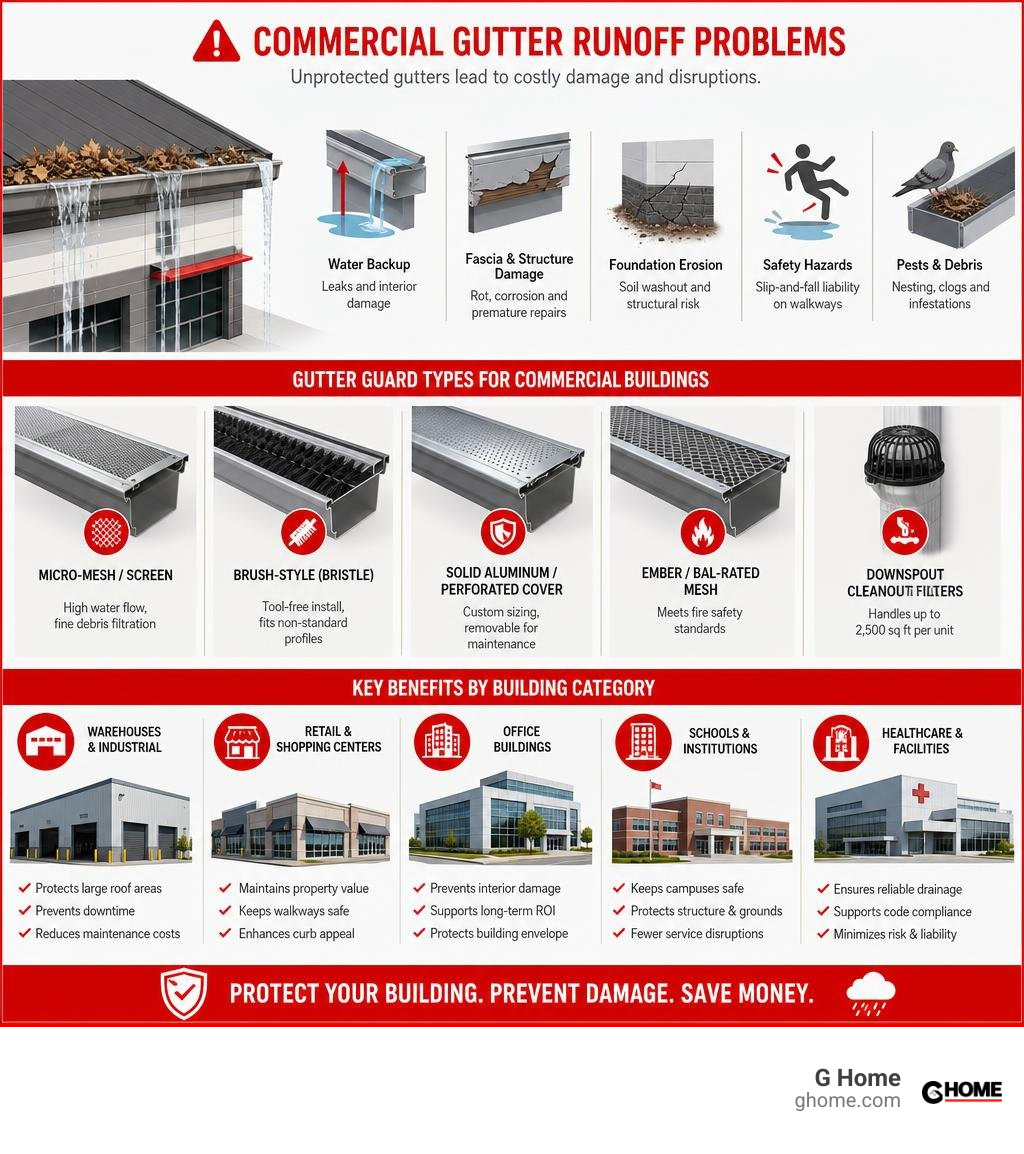
Here is a quick overview of the best gutter guard types for commercial buildings:
| Gutter Guard Type | Best For | Key Benefit |
|---|---|---|
| Micro-mesh / screen | Most commercial buildings | High water flow, fine debris filtration |
| Brush-style (bristle) | Metal buildings, box gutters, sculpted eaves | Tool-free install, fits non-standard profiles |
| Solid aluminum / perforated cover | Architectural or high-volume systems | Custom sizing, removable for maintenance |
| Ember / BAL-rated mesh | Bushfire-prone or fire-code regions | Meets fire safety standards |
| Downspout cleanout filters | High-rise, large roof drainage areas | Handles up to 2,500 sq ft per unit |
The problems caused by unprotected commercial gutters are real and expensive. Water backing up into a building, fascia rot, foundation erosion, slip-and-fall liabilities on walkways, bird nesting, pest infestations, and repeated lift-rental cleaning cycles all add up fast. For commercial property managers and building owners in Middle Tennessee, where heavy seasonal storms and dense tree cover are facts of life, a quality gutter protection system is not optional.
Why Commercial Properties Need Specialized Gutter Protection
Commercial properties are engineered differently than residential homes, and their drainage systems are no exception. When heavy rainfall hits Middle Tennessee towns like Nashville, Franklin, or Murfreesboro, commercial roofs must shed thousands of gallons of water per minute. Without specialized protection, even a minor clog can trigger a catastrophic failure.
The Costly Risks of Clogged Commercial Gutters
When water cascades over the edge of a clogged commercial gutter, it pools directly at the base of the structure. We often discuss the importance of gutter guards for foundation protection because commercial concrete slabs, sidewalks, and parking areas are highly vulnerable to cracking and shifting when saturated.
Furthermore, standing water near walkways creates immediate slip-and-fall liabilities, especially when temperatures drop in winter and create patches of black ice. Inside the building, clogged gutters cause water to back up under the roof membrane, rotting the fascia boards and seeping into ceiling tiles. This moisture quickly leads to mold growth and can damage expensive interior inventory or sensitive electronic equipment.
If water pools near roof-mounted HVAC units or drains down exterior walls into AC and A/C ventilation pathways, the repair costs can skyrocket into the tens of thousands of dollars. Preparing your facility with essential gutter guards before storm season is the smartest way to mitigate these risks and avoid emergency repair bills.
Pest Prevention and Bird Nesting Mitigation
Open commercial gutters are highly attractive to local pests. Birds, particularly starlings and pigeons, frequently use wide commercial gutters for bathing, splashing, and nesting. This creates significant mess, introduces health hazards, and leads to code compliance issues for commercial facilities, especially those in food service or healthcare.
Rodents and insects also thrive in the damp, decaying organic matter that accumulates in unprotected gutters. Installing heavy-duty physical barriers keeps these pests out of your gutters, rafters, and soffits entirely, helping you maintain a clean, compliant, and professional facility.
Types of Gutter Guards for Commercial Buildings
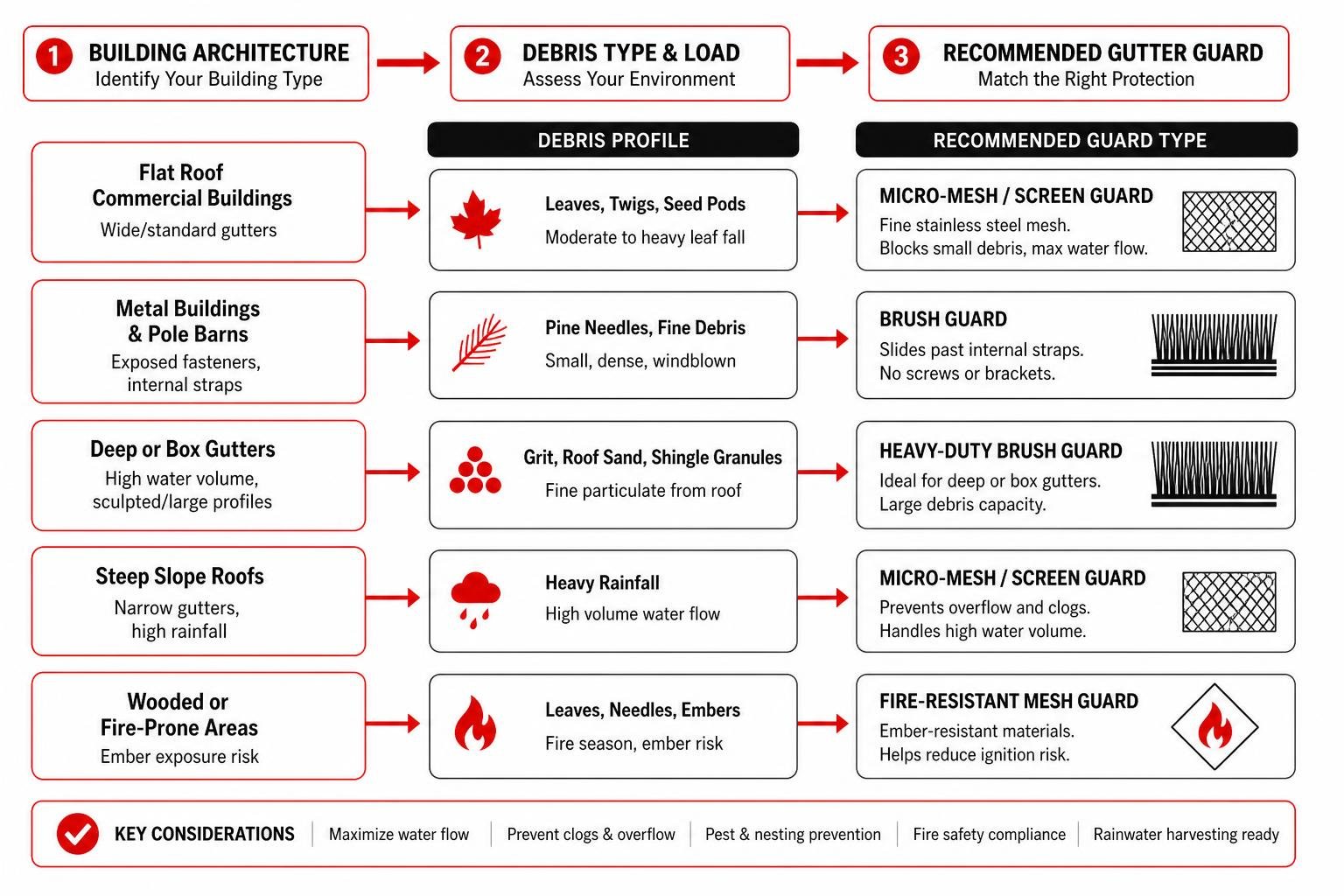
Choosing the right protection system requires matching the guard style to your building’s unique architecture, roof profile, and local debris load.
Micro-Mesh and Screen Gutter Guards for Commercial Buildings
Micro-mesh systems represent the gold standard for many commercial facilities. These systems feature fine stainless steel mesh screens mounted on heavy-duty aluminum frames. They are designed to allow maximum water flow while blocking even the smallest debris, such as pine needles, seed pods, and roof grit.
At G Home, we install gutter protection systems manufactured by our parent company, a 25-year-old leading manufacturer of gutter protection solutions used on more than 1.6 million homes and trusted by major home improvement retailers, including The Home Depot, Lowe’s, Costco, and Amazon. These high-quality systems are built to handle the heavy downpours common in Smyrna, Hendersonville, and Brentwood without shedding water over the outer edge of the gutter.
Heavy-Duty Brush and Box Gutter Guards for Commercial Buildings
For pre-engineered metal buildings, pole barns, and structures with unique sculpted eave gutters or deep box gutters, traditional screen systems can be difficult to mount. This is where heavy-duty brush-style guards excel.
These guards feature thick, UV-treated polypropylene bristles wrapped around a heavy galvanized steel wire core. Their open bristle design helps hold leaves, sticks, and larger debris above the gutter channel so stormwater can continue moving toward the downspouts instead of backing up along the roof edge.
Fire Safety, BAL Ratings, and Rainwater Harvesting Compliance
If your commercial facility is located near heavily wooded areas or must comply with strict regional fire safety codes, choosing fire-resistant materials is critical. Some specialized aluminum and steel mesh guards are rated to prevent windborne embers from igniting dry leaf litter inside the gutters.
Additionally, if your building utilizes a rainwater harvesting system for landscaping or industrial processes, your gutter guards serve as the critical first stage of filtration. In these cases, it is important to select guards that are certified for rainwater catchment and free from toxic coatings, like paint, to preserve water quality.
Sizing, Selection, and Engineering Specifications
Commercial gutters are substantially larger than residential ones. While most homes use 5-inch or 6-inch K-style gutters, commercial properties typically feature 7-inch, 8-inch, or even larger custom box gutters to handle massive roof runoff.
Calculating Gutter Dimensions and Estimating Total Footage
Before purchasing any gutter protection system, you must measure the actual physical width and depth of your gutters, as nominal sizes do not always tell the whole story. For example, a nominal 7-inch steel guard may actually measure 7 7/8 inches to ensure proper coverage, while an 8-inch guard may measure closer to 8 7/8 inches.
To determine the correct capacity for your building, you must calculate the total roof square footage, the roof pitch, and the local peak rainfall intensity. For properties experiencing drainage challenges, learning how to choose the right gutter downspout guard can prevent water from backing up during intense storms.
Protecting Roof Warranties and Existing Drainage Systems
One of the biggest concerns for facility managers is ensuring that the installation of gutter guards does not void existing commercial roof warranties. Many single-ply rubber (EPDM or TPO) and metal roof manufacturer warranties strictly prohibit driving screws through the roofing material or sliding guards deep under the roof membrane.
To keep your warranty fully intact, we recommend using clip-on attachment designs, non-penetrating fasteners, or self-fitting brush systems that sit entirely within the gutter channel without touching the roof. If you are looking to upgrade your building’s drainage, exploring professional commercial gutter services is the best way to ensure a safe, warranty-compliant installation.
Installation, Winter Performance, and Long-Term Maintenance
Proper installation and ongoing maintenance are what keep a commercial gutter system functioning year after year.
Professional Installation vs. DIY Protocols
While some brush or foam-style guards can technically be slid into gutters without specialized tools, DIY installation on commercial properties is rarely practical or safe. Commercial rooflines are often high, hard to access, and require specialized safety gear, scaffolding, or lift rentals.
Professional installation by certified technicians ensures that the guards are pitched correctly, fastened securely against high winds, and integrated seamlessly with the roof’s drip edge. For commercial properties in Franklin, utilizing specialized gutter protection in Franklin, TN ensures the job is done safely and correctly.
If your facility is located in other parts of Middle Tennessee, scheduling commercial services in Franklin, TN or matching regional guidelines like commercial gutter installation guides can help you find local, licensed professionals who carry the proper liability insurance for commercial work.
Winter Weather Performance and Ice Dam Prevention
Middle Tennessee winters bring unique challenges, including sudden freezes and heavy snow. Gutter guards can play a surprising role in winter weather management.
For example, black UV-treated polypropylene brush bristles naturally absorb solar heat on sunny winter days. This heat absorption helps melt snow and ice inside the gutter, reducing the risk of ice dams and winter-related gutter sagging.
For sloped metal roofs, pairing your gutter guards with roof snow guards prevents heavy snow slides from ripping the gutters off the building. You can also weave de-icing cables or heat tape directly through or beneath your gutter guards to keep water flowing freely in freezing temperatures.
Maintenance Requirements, Lifespan, and Warranties
It is important to remember that no gutter guard system is 100 percent maintenance-free. While quality guards dramatically reduce cleaning frequency, every gutter guard still needs occasional maintenance to remove surface material that can collect from sap, pollen, and other organic residue. Fine silt, leaves, and small debris may also settle in the gutters over time.
Commercial systems should be inspected at least twice a year. Fortunately, systems designed with removable clips or flexible brush sections make this process easy. Maintenance crews can quickly pop the guards off, flush out any fine silt, clear surface buildup, and snap them back into place.
High-quality commercial-grade systems typically offer material warranties ranging from 10 to 50 years, with many premium stainless steel and aluminum systems boasting an expected service life of 50 years or more. For property owners looking to maximize their roof’s lifespan, understanding seamless solutions for Nashville roof and gutter repair is a great way to protect your entire building envelope. To plan your installation timeline perfectly, you can also read about the best time to install gutter guards in Franklin, TN, to ensure your building is prepared before the heavy seasonal rains arrive.
Frequently Asked Questions about Commercial Gutter Protection
How do gutter guards affect commercial roof warranties?
Most commercial roofing manufacturers allow gutter guard installations as long as the guards do not penetrate the roof membrane or shingles. Utilizing non-penetrating clips, fascia-mounted brackets, or self-sitting gutter brushes ensures that your roof warranty remains fully protected. Always consult with a certified commercial installer to verify compliance with your specific roof type.
What is the typical lifespan of commercial-grade gutter guards?
Commercial-grade gutter guards are built to withstand harsh environmental conditions. Premium systems made from 0.040-inch thick aluminum, powder-coated steel, or UV-treated polypropylene typically last between 15 and 25 years. Regular biannual inspections and occasional flush-outs will maximize the lifespan of your investment.
Can commercial gutter guards handle heavy rainfall during storm seasons?
Yes, provided they are engineered for commercial water volumes. High-quality micro-mesh and perforated aluminum guards feature a 50 percent open-area design, allowing them to process heavy storm runoff easily. Downspout cleanouts and high-capacity filters can process up to 12 gallons of water per minute, keeping your building safe even during severe Middle Tennessee storms.
Conclusion
Investing in gutter guards for commercial buildings is a proactive way to protect your facility from structural damage, foundation erosion, and expensive maintenance cycles. By choosing the right material, size, and installation method, you can ensure your drainage system operates flawlessly through every season.
At G Home, we specialize in providing tailored, high-quality gutter protection and exterior maintenance services designed to withstand the unique climate challenges of Middle Tennessee. Whether your facility is in Nashville, Franklin, Smyrna, Nolensville, Brentwood, Hendersonville, or Murfreesboro, our team of experienced professionals is here to deliver stress-free, reliable results.
Ready to protect your commercial property and eliminate the headache of constant gutter cleanings? Please contact us for commercial exterior maintenance services today to request a professional consultation and custom quote for your facility.