
How to Clean Vinyl Siding on Commercial Buildings
Why Commercial Siding Cleaning Is Essential for Your Building’s Health and Value
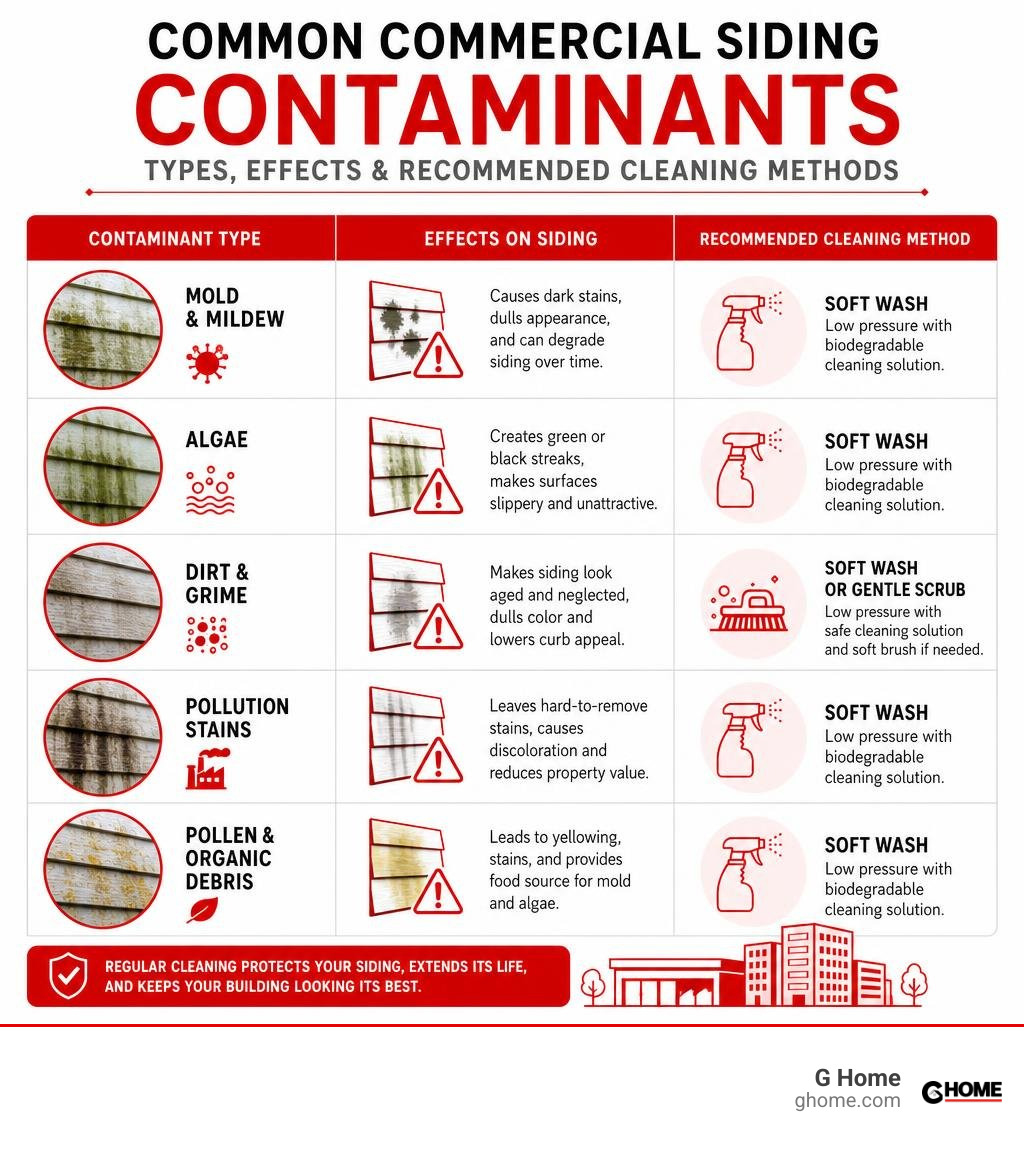
Commercial siding cleaning is the process of safely removing dirt, mold, mildew, algae, and pollution stains from the exterior walls of a business or commercial property.
Here’s a quick overview of what you need to know:
| Question | Quick Answer |
|---|---|
| Best cleaning method | Soft washing (low pressure + biodegradable solution) |
| How often | Once a year, or more in humid climates |
| Most common contaminants | Mold, mildew, algae, dirt, pollution stains |
| Safe for vinyl siding? | Yes, with low pressure only |
| Professional vs. DIY | Professional is safer and lasts 4-6x longer |
Your building’s exterior takes a beating every single day. Rain, humidity, pollen, and organic growth, especially here in Middle Tennessee, cause siding to collect grime faster than most people expect. Left untreated, that buildup isn’t just ugly. It actively eats away at your siding material, shortening its lifespan and driving up replacement costs.
The good news? Regular exterior cleaning stops that damage before it starts. It also sends a clear signal to customers: this is a business that takes care of its property.
The Ultimate Guide to Commercial Siding Cleaning: Soft Wash vs. Pressure Wash
When it comes to commercial siding cleaning, many business owners make the mistake of thinking that more water pressure equals a faster, deeper clean. In reality, relying on raw physical force is the fastest way to turn a routine maintenance task into a multi-thousand-dollar repair bill.
The difference between the two methods matters because siding needs a cleaning approach that removes growth without forcing water behind the panels. Our blog on soft washing vs pressure washing explains why low-pressure methods are often the better fit for delicate exterior surfaces.
Traditional pressure washing relies on sheer, unyielding water pressure, often between 2,500 and 4,000 PSI (pounds per square inch). While this force is great for blasting grease off concrete walkways, it is highly destructive to commercial siding. High-pressure streams can easily crack vinyl panels, strip protective coatings off aluminum, and blast away the delicate mortar joints in brick walls. Even worse, it can force water up and underneath siding panels, trapping moisture against your building’s wood framing and creating a perfect breeding ground for hidden structural rot.
Soft washing, on the other hand, is a low-pressure cleaning method that uses specialized, biodegradable solutions to gently break down dirt and kill organic growth at the molecular level. Instead of blasting the surface, soft washing utilizes a chemical mix, typically consisting of water, sodium hypochlorite (to sanitize), and a specialized surfactant (to help the cleaner cling to vertical siding). The pressure used is incredibly gentle, usually between 100 and 500 PSI, which is comparable to the force of a strong garden hose.
For commercial properties that need more than siding cleaned, G Home also offers commercial exterior cleaning services in Franklin, TN designed for storefronts, offices, retail centers, and other business properties.
| Feature | Traditional Pressure Washing | Low-Pressure Soft Washing |
|---|---|---|
| Primary Cleaning Agent | Kinetic force (high-pressure water) | Chemical sanitizers (biodegradable solutions) |
| Water Pressure Level | 2,500 to 4,000+ PSI | 100 to 500 PSI |
| Risk of Surface Damage | High (cracking, stripping, water intrusion) | Virtually zero |
| How Long It Lasts | 3 to 6 months (organic roots remain) | Keeps surfaces clean 4 to 6 times longer |
| Water Usage | Extremely high | Significantly lower |
Because soft washing targets the spores of mold, mildew, and algae at their roots, it sanitizes the surface completely. This chemical treatment ensures that the organic matter doesn’t just look clean; it is completely dead. As a result, soft washing keeps your siding clean four to six times longer than traditional pressure washing, which merely haircuts the algae and leaves the root systems intact to grow back rapidly.
Material-Specific Approaches for Commercial Exteriors
Every commercial building is unique, and there is no such thing as a “one-size-fits-all” approach to exterior maintenance. Different siding materials have different chemical tolerances, physical limits, and structural designs. Applying the wrong cleaning solution or pressure level can cause permanent discoloration or structural degradation.
Brick, vinyl, metal, stucco, and EIFS each need a different cleaning plan. For properties with masonry details, our article brick by brick: a simple guide to exterior brick maintenance covers why porous surfaces require extra care during exterior washing.
Best Practices for Commercial Siding Cleaning on Vinyl and Metal
Vinyl siding is the most common exterior cladding for light commercial buildings, but it requires careful handling. Because vinyl is made of polyvinyl chloride (PVC), it is susceptible to chemical reactions and temperature changes. For instance, vinyl gets brittle in cold weather. A high-pressure burst on a cold morning can easily spider-crack a panel, whereas the same burst in the summer might only bow it.
Furthermore, vinyl siding must never be cleaned with products containing organic solvents like acetone, benzene, or tetrahydrofuran, as these can chemically react with the PVC, causing permanent hazing, yellowing, and brittleness. Instead, we recommend using professional-grade, water-soluble solutions applied at safe dilution ratios. When applied using a downstream injector setup, which draws the concentrate into the water line at a safe dilution ratio, these cleaners lift heavy soils and organic growth without damaging the vinyl’s structural integrity.
Metal siding, such as aluminum or steel panels, presents a different challenge: oxidation. Over time, constant exposure to oxygen and UV rays causes aluminum siding to develop a chalky, white powder on its surface. If you wash oxidized metal with too much pressure, you will strip the pigment unevenly, leaving your building’s exterior looking splotchy and ruined. Aluminum requires low-pressure washing combined with specific mild surfactants to lift the dirt without disturbing the underlying oxidized paint layer.
Specialized Commercial Siding Cleaning for Brick and Stucco
Porous brick and delicate stucco require a completely modified approach. Brick is highly porous, meaning it naturally absorbs moisture, dirt, and environmental pollutants deep within its texture. If an operator uses excessive pressure, they risk blasting away the face of the brick or fracturing the mortar joints holding the wall together. We use controlled, low-pressure soft washing to gently draw contaminants out of the brick’s pores without compromising the structural masonry.
Stucco and EIFS (Exterior Insulation and Finish System) are even more delicate. EIFS is a multi-layered synthetic stucco system that uses foam insulation boards covered in a thin mesh and plaster coat. If high-pressure water hits a small crack or seam in EIFS, it can easily get behind the synthetic layer, causing the system to delaminate and bubble.
Stucco has a rough, textured surface that traps dirt and organic spores easily. Cleaning it safely requires relying entirely on the chemical dwell time of a soft wash solution to dissolve the grime, followed by a gentle, high-volume rinse.
Step-by-Step Process for Cleaning Commercial Vinyl Siding
To achieve professional results, we follow a strict, systematic process that ensures safety, efficiency, and a spotless finish.
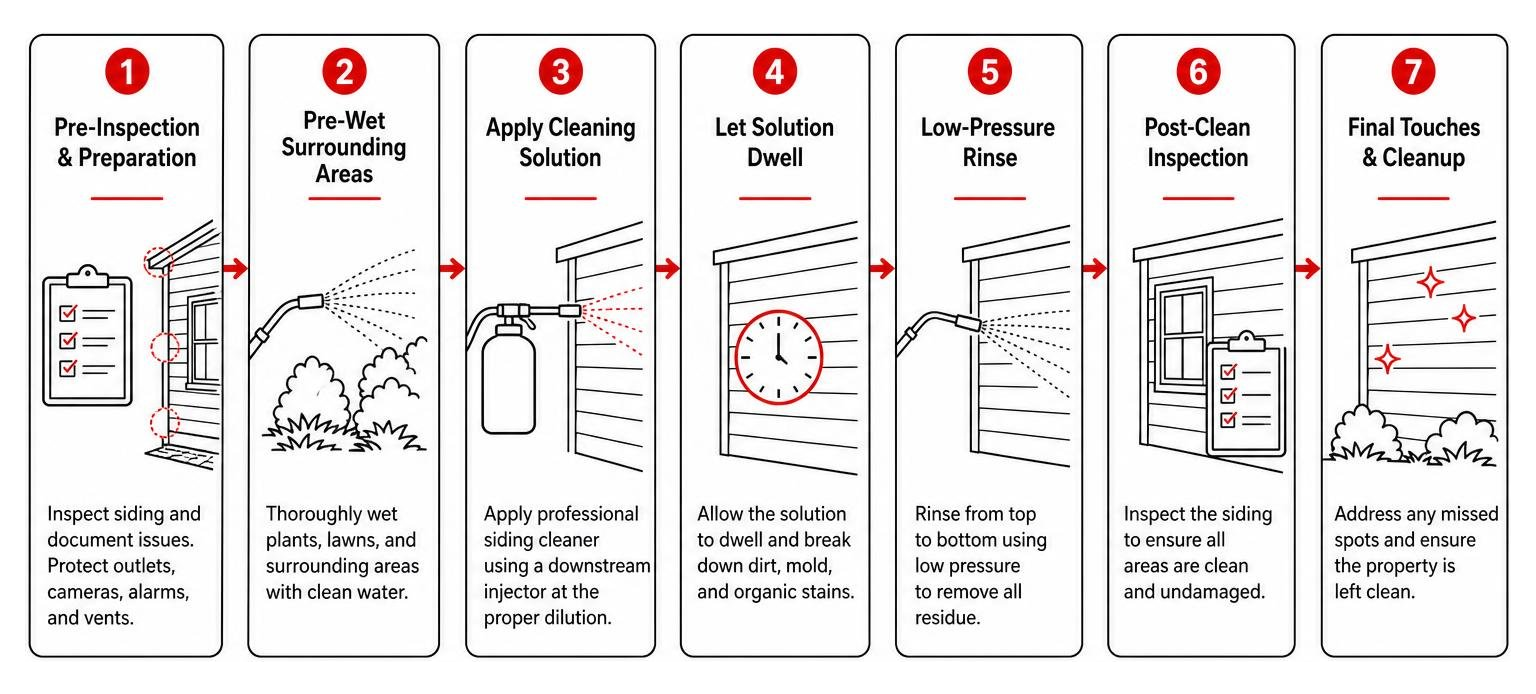
1. Pre-Inspection and Preparation
Before a drop of water hits the building, we perform a thorough walk-around. We look for pre-existing damage like cracked panels, blown caulk, or loose trim, and we document these areas. Next, we tape off external electrical outlets, security cameras, fire alarms, and HVAC vents to prevent water intrusion.
2. Pre-Wetting the Surrounding Area
We thoroughly saturate all nearby plants, lawns, and shrubs with clean water. This ensures that if any cleaning chemical oversprays onto the landscaping, it is diluted immediately and cannot be absorbed by the plants.
3. Chemical Application (Bottom-Up)
Using a low-pressure nozzle (such as a black soap nozzle) and a downstream injector, we apply the diluted cleaning solution to the siding. Crucially, we apply the mixture starting at the bottom of the building and working our way up. This prevents “streak-loading,” which occurs when dirty chemical runoff flows down dry siding and leaves permanent, vertical clean streaks that are incredibly difficult to wash out.
4. Dwell Time
We allow the cleaning solution to dwell on the siding for 10 to 15 minutes. This gives the active ingredients time to break down the dirt and kill the organic growth at its root. We monitor the building constantly during this phase to ensure the solution does not dry on the surface, as this can cause unsightly soap spots.
5. High-Volume, Low-Pressure Rinse (Top-Down)
Once the contaminants are fully dissolved, we switch to a wide-angle rinse nozzle (such as a 25-degree or 40-degree fan nozzle). We rinse the siding starting from the top of the building and working our way down. We always maintain a consistent standoff distance of 3 to 4 feet from the siding and angle the spray slightly downward. This prevents water from being forced upward under the siding panels.
6. Post-Rinse and Plant Protection
After the siding is clean, we rinse the entire area again, paying special attention to the windows to remove any residual soap film. Finally, we saturate the landscaping with clean water a second time to wash away any chemical runoff from the soil.
For storefronts and business properties that need routine maintenance, our soft washing services in Franklin, TN give commercial exteriors a safer alternative to high-pressure cleaning.
Protecting Landscaping and Surrounding Areas
Protecting your property’s surroundings is just as important as cleaning the building itself. Chemical runoff can easily scorch delicate landscaping, leaving you with dead grass and ruined ornamental shrubs.
To prevent this, we utilize a highly effective two-person watering system. While one technician applies the soft wash solution to the siding, the second technician uses a dedicated water hose to continuously spray the surrounding plants and grass. This creates a constant barrier of clean water, diluting any chemical drift instantly.
Additionally, we coordinate our services to protect your building’s windows. Siding cleaning inevitably leaves a light soap residue on glass, which is why we always coordinate window rinsing to occur immediately after the siding soft wash is complete. This ensures a streak-free, crystal-clear finish across your entire storefront.
Frequently Asked Questions about Commercial Siding Maintenance
How often should commercial siding be professionally cleaned?
For most commercial properties in Middle Tennessee, we recommend scheduling a professional siding cleaning once a year. Our local climate, characterized by hot, humid summers and high seasonal pollen counts, creates the perfect environment for rapid mold, mildew, and algae growth. Shaded areas of your building with low sun exposure are particularly vulnerable and may develop green algae buildup much faster than sunny elevations.
Regular yearly maintenance prevents these organic contaminants from taking root and causing permanent staining or structural damage. If your business is located near high-traffic roads or industrial zones, you may require more frequent cleanings to combat heavy vehicle emissions and environmental soot.
What are the benefits of professional cleaning versus DIY?
While renting a pressure washer and tackling the job yourself might seem like a way to save a few dollars, DIY commercial cleaning carries massive risks.
First, professional technicians undergo rigorous training, often logging over 150 hours of hands-on experience, to learn how to handle different siding materials, calculate precise chemical mix ratios, and operate heavy equipment safely.
Second, commercial buildings often require working at heights. Professionals have the specialized equipment, such as boom lifts and water-fed poles, to clean multi-story structures safely. They are also fully licensed and carry comprehensive general liability insurance, protecting you from costly property damage or personal injury liabilities.
Finally, commercial-grade equipment is vastly superior to store-bought units. It allows us to apply heated water systems for stubborn industrial grease and complete large-scale projects in a fraction of the time. For businesses looking to maintain their property value and professional reputation, investing in professional exterior cleaning is the smartest, most stress-free choice.
What is the typical cost of commercial siding cleaning?
The cost of commercial siding cleaning is influenced by several key factors:
- Square Footage: Larger buildings require more materials and labor, though the cost per square foot typically decreases as the size of the project increases.
- Building Height and Access: Multi-story buildings that require specialized lifts, scaffolding, or wand extensions cost more to clean than single-story structures.
- Siding Material and Condition: Heavily oxidized metal or delicate stucco that requires specialized chemical treatments may influence the final price.
- Landscaping Density: Properties with dense, delicate landscaping that require intensive protection protocols take longer to clean safely.
On average, standard commercial siding cleaning ranges from $0.20 to $0.35 per square foot. To get an accurate estimate tailored to your specific property, it is always best to request a customized quote.
Conclusion
Your commercial property’s exterior is the very first thing clients, customers, and tenants see. Maintaining clean, bright siding is essential for protecting your building’s structural integrity, reducing long-term repair costs, and presenting a professional image to the world.
At G Home, we provide a stress-free, professional service tailored to the unique climate challenges of Middle Tennessee. With over 25 years of experience, our fully licensed and insured teams proudly serve businesses throughout:
- Smyrna, Tennessee
- Nolensville, Tennessee
- Nashville, Tennessee
- Franklin, Tennessee
- Brentwood, Tennessee
- Hendersonville, Tennessee
- Murfreesboro, Tennessee
Don’t let dirty siding drag down your business’s curb appeal or lead to expensive premature replacements. Let our experienced teams handle the hard work safely and efficiently.
Ready to restore your property’s shine? Contact our professional commercial siding cleaning technicians at G Home today!